Best Multifunctional Furniture for Small Spaces
This post may contain affiliate links. If you purchase through one, SofiDecor may earn a small commission at no extra cost to you.
The table was for eating, until it became the desk. Then it held the laundry for an afternoon, then the groceries, then a puzzle no one finished. In a small home, every surface is quietly asked to do more than one thing. Multifunctional furniture for small spaces simply admits it from the start, and is designed to change roles without complaint.
The best pieces do two jobs well rather than five jobs poorly. A sofa that becomes a bed, a table that folds to a shelf, a bench that is also a coffee table: each one replaces a piece you would otherwise have to fit somewhere else. This guide gathers 15 of the best, grouped by what they do, with the measurements and details to check before buying. For storage across the whole home, see Small Space Storage Ideas: The Complete Guide.
Multifunctional Furniture for Small Spaces at a Glance
A piece earns its place in a small room by the number of times a day it is useful. The table below shows the two jobs each one does, so you can match them to the gaps in your own home.
Costs are rough ranges and vary by size, material, and store.
| # | Piece | Job 1 | Job 2 | Cost |
|---|---|---|---|---|
| 1 | Sofa bed | Seating | Guest bed | $$$ |
| 2 | Wall bed with shelves | Bed | Shelving or desk | $$$ |
| 3 | Daybed | Sofa | Single bed | $$–$$$ |
| 4 | Loft bed with desk | Bed | Workspace | $$–$$$ |
| 5 | Drop-leaf table | Console | Dining table | $$ |
| 6 | Wall-mounted fold-down table | Shelf | Table or desk | $–$$ |
| 7 | Extendable console | Console | Table for 6 or more | $$$ |
| 8 | Lift-top coffee table | Coffee table | Desk | $$–$$$ |
| 9 | Nesting tables | Side table | Extra surfaces | $–$$ |
| 10 | Storage ottoman | Seat or footrest | Storage | $–$$ |
| 11 | Bench | Seating | Coffee table or console | $–$$ |
| 12 | Stackable stools | Seating | Side tables | $ |
| 13 | Secretary desk | Cabinet | Desk | $$–$$$ |
| 14 | Ladder desk | Shelving | Desk | $–$$ |
| 15 | Open shelving divider | Shelving | Room divider | $$ |
Cost guide: $ = under about $100; $$ = about $100–$400; $$$ = over about $400.
How to Choose Multifunctional Furniture for Small Spaces
A piece that does two jobs has two chances to disappoint. The test is simple: it should be good enough at each job that you would keep it even if it only did that one.
Before buying any multifunctional furniture for small spaces, check these five things:
- The change itself. If switching from one role to the other takes more than a minute or needs two people, you will stop doing it. Look for smooth hinges, gas lifts, and simple mechanisms.
- The open size. Measure the room for the piece in its largest position, not its smallest. A sofa bed or a wall bed needs space in front of it when open.
- Comfort in both roles. A sofa that is a poor bed, or a bed that is a poor sofa, will only ever be used one way.
- Weight and stability. Moving parts add weight and strain. Choose solid frames, and secure tall pieces to the wall.
- Proportion. Raised legs, slim arms, and light finishes keep a multifunctional piece from looking bulky in a small room.
Beds That Become Something Else
A bed takes more floor than anything else in a home, and it is used for only a third of the day. Letting it become a sofa, a shelf, or a desk during the other two-thirds is the single largest gain any multifunctional furniture for small spaces can offer.
1. A Sofa Bed
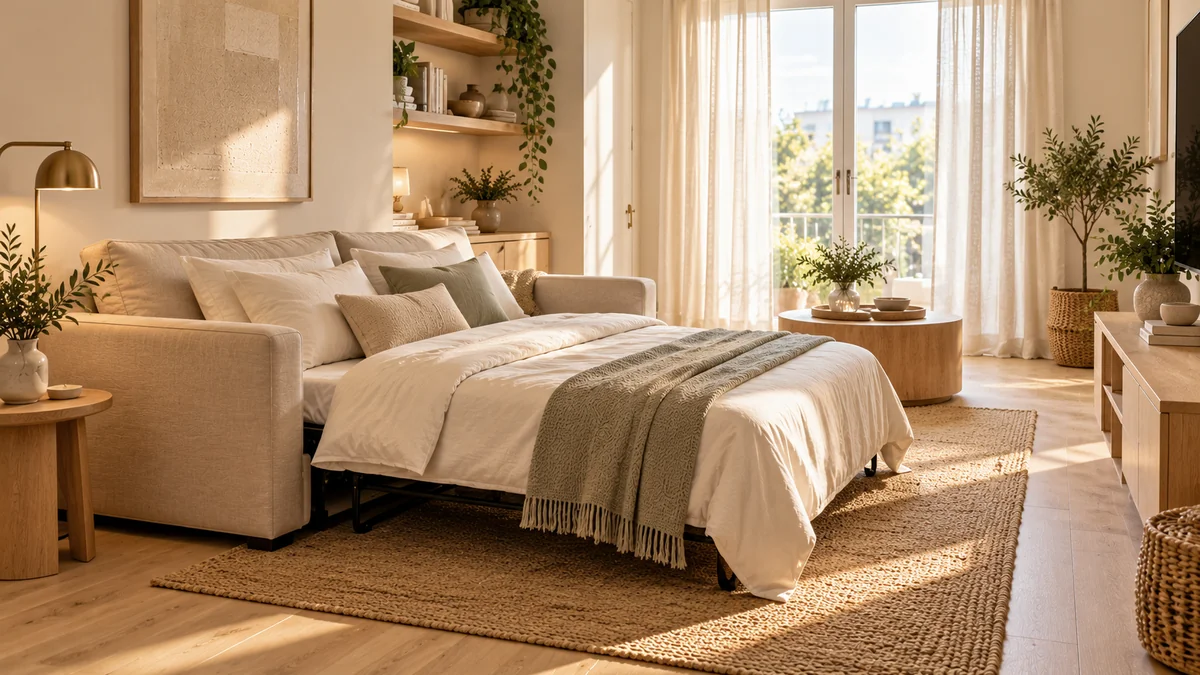
The classic way to fit a guest bed into a living room. Look for a mechanism that opens in one smooth motion and a mattress at least 4 to 5 inches thick. When open, most full-size sofa beds reach about 7 to 8 feet from the wall, so measure the room in that position before buying.
2. A Wall Bed With Shelves
A wall bed folds up into a cabinet, often with shelves or a fold-down desk on its face. When the bed is up, the room becomes a living room or office. It must be firmly fixed to the wall, usually by a professional, and the room needs about 7 feet of clear floor in front of it for a full or queen size when open.
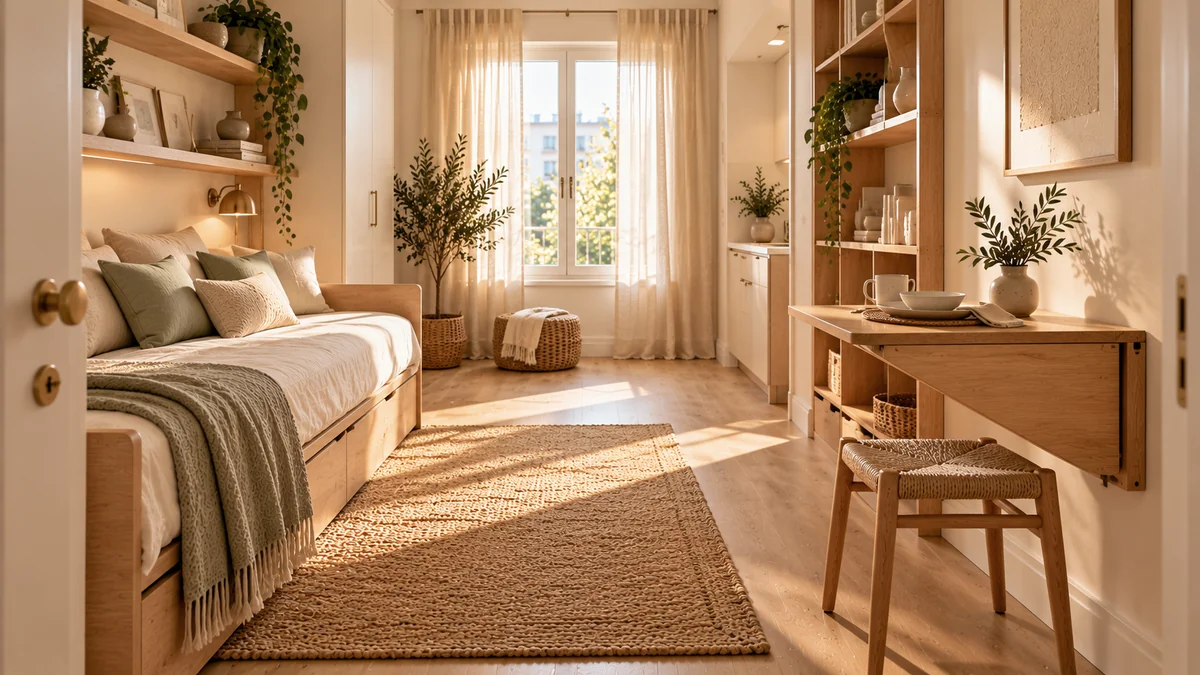
3. A Daybed
A daybed has a back and sides, like a sofa, and a twin mattress, like a bed. It works well in a study or a guest room that is used every day for something else. For layouts that fit one in a small room, see Small Bedroom Layouts: Floor Plans for Every Bed Size.
4. A Loft Bed With a Desk Underneath
Raising the bed frees the whole footprint beneath it for a desk, a reading chair, or storage. It needs a ceiling high enough to sit up in bed, usually about 30 to 36 inches between the top of the mattress and the ceiling. It works best in rooms with ceilings of about 9 feet or more.
Tables That Grow and Shrink
Most small homes need a large table only a few times a month. Tables that change size give you that table on the days you need it and a free floor on all the others, which makes them the most practical multifunctional furniture for small spaces that host.
5. A Drop-Leaf Table
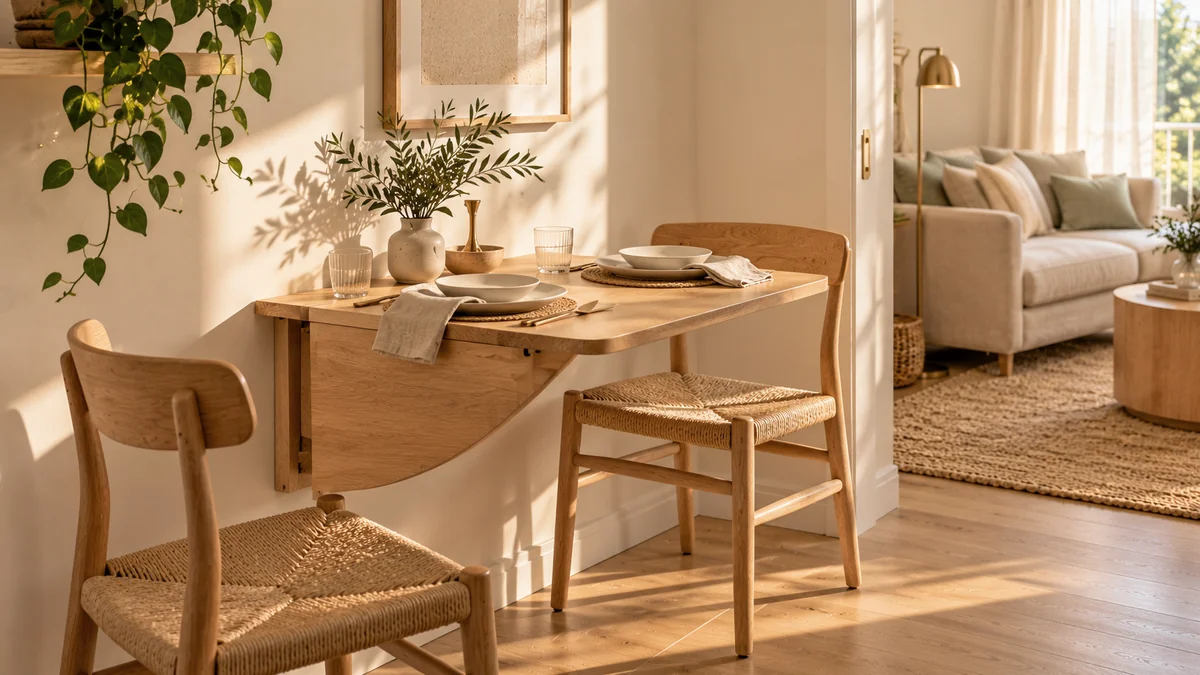
With both leaves down, a drop-leaf table is a narrow console about 10 to 14 inches deep. Raise one leaf for two people, both for four. Leave about 30 to 36 inches between the open table and the nearest wall so chairs can pull out.
6. A Wall-Mounted Fold-Down Table
A table that folds flat against the wall is the most space-efficient surface you can add. Open, it is a breakfast table or a desk at about 28 to 30 inches high; closed, it is a shallow shelf. It suits kitchens, entries, and studios where floor space is rare.
7. An Extendable Console
Some consoles extend with added leaves into a dining table that seats six or more. They are more expensive, but they replace a full dining table in homes that host only occasionally. Check how the leaves are stored and how easily they lock into place.
8. A Lift-Top Coffee Table
The top rises to desk height for eating or working from the sofa, and the space underneath holds what would otherwise sit on top. For more pieces with hidden storage, see Hidden Storage Furniture: Ottomans, Benches, and Beds That Hold More.
9. Nesting Tables
Two or three tables that slide under one another take the space of one. Pull them apart when guests arrive, and tuck them away afterward. They also work as a bedside table that grows when you need more surface.
Seating That Does More
Chairs take up space even when no one is sitting in them. Seating that becomes a table, a footrest, or a storage box earns that space all day long, and it is often the least expensive multifunctional furniture for small spaces.
10. A Storage Ottoman
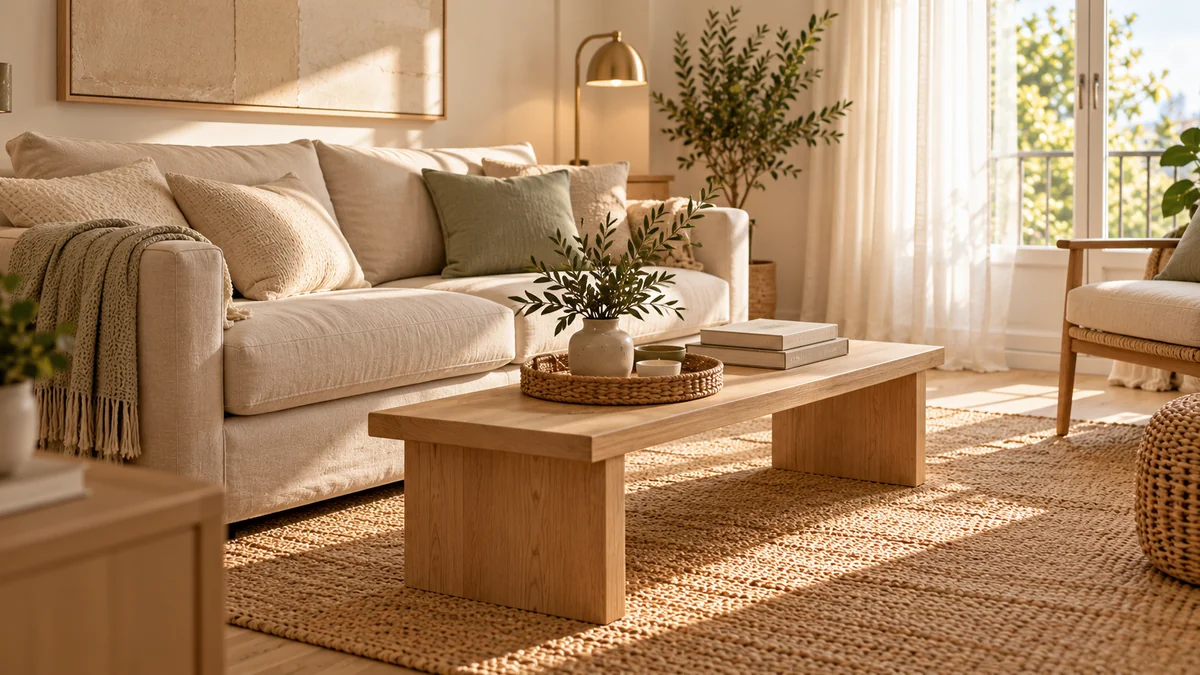
A seat, a footrest, and a box in one. Add a tray on top and it becomes a coffee table. A size of about 18 to 24 inches across fits most small living rooms.
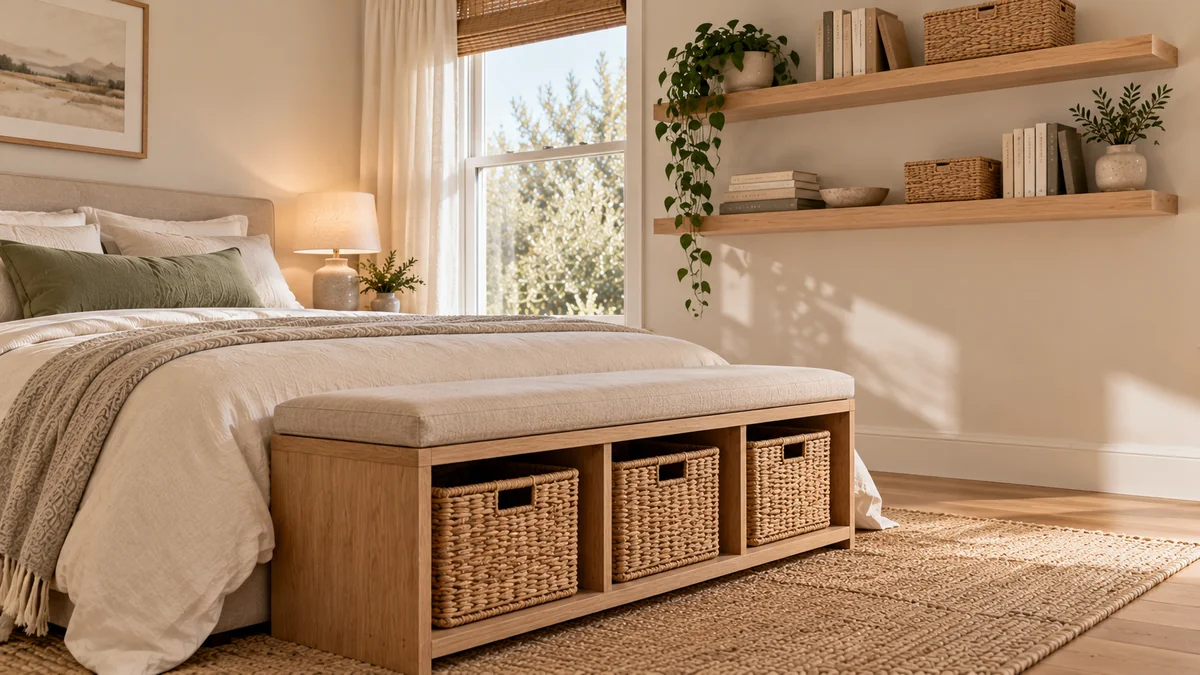
11. A Bench
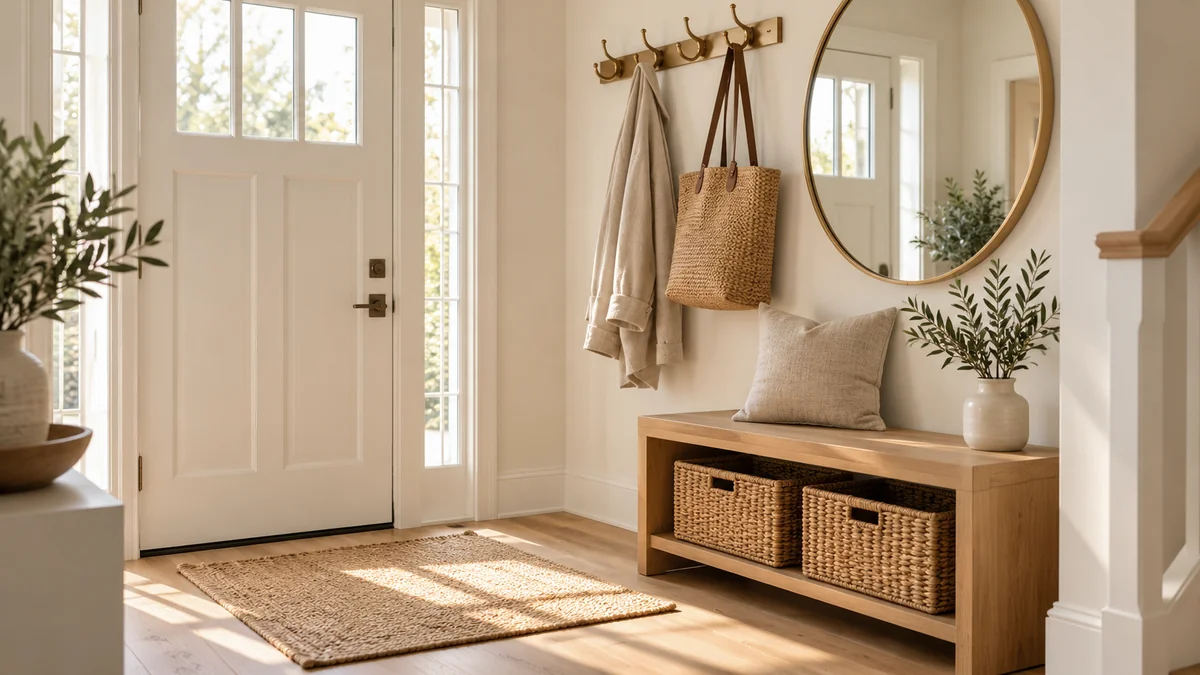
A low bench in front of the sofa holds a tray and books like a coffee table, and seats two more people when guests arrive. By the door, it becomes a place to put on shoes. For ideas for that spot, see Small Entryway Storage Ideas That Keep the Door Clear.
12. Stackable Stools
Simple wooden stools serve as side tables, plant stands, and extra seats. They stack in a corner when not needed. Choose a height of about 18 inches to match a standard table and sofa.
Desks and Shelves That Work Twice
A desk is often the hardest piece to fit into a small home, because it is needed only part of the day and yet takes space all of it. The best solutions let the desk disappear when work is done, and they are some of the most useful multifunctional furniture for small spaces where people work from home.
13. A Secretary Desk
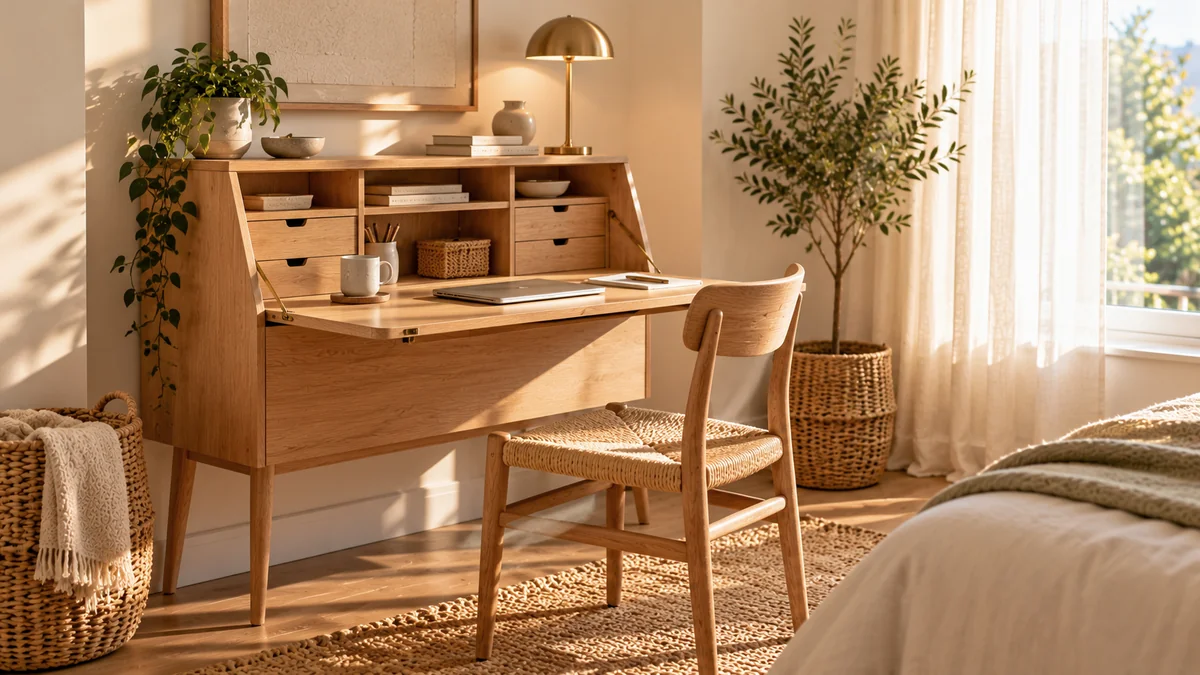
A cabinet with a front that folds down into a writing surface. Closed, it looks like a piece of furniture; open, it holds a laptop, papers, and supplies in small compartments. A depth of about 16 to 20 inches fits most rooms. Tall secretaries should be anchored; the Anchor It campaign from the U.S. Consumer Product Safety Commission explains how.
14. A Ladder Desk
A leaning shelf with a desk surface at its base takes almost no floor and adds shelves above the workspace. It suits a corner or a narrow wall in a bedroom or living room.
15. Open Shelving as a Room Divider
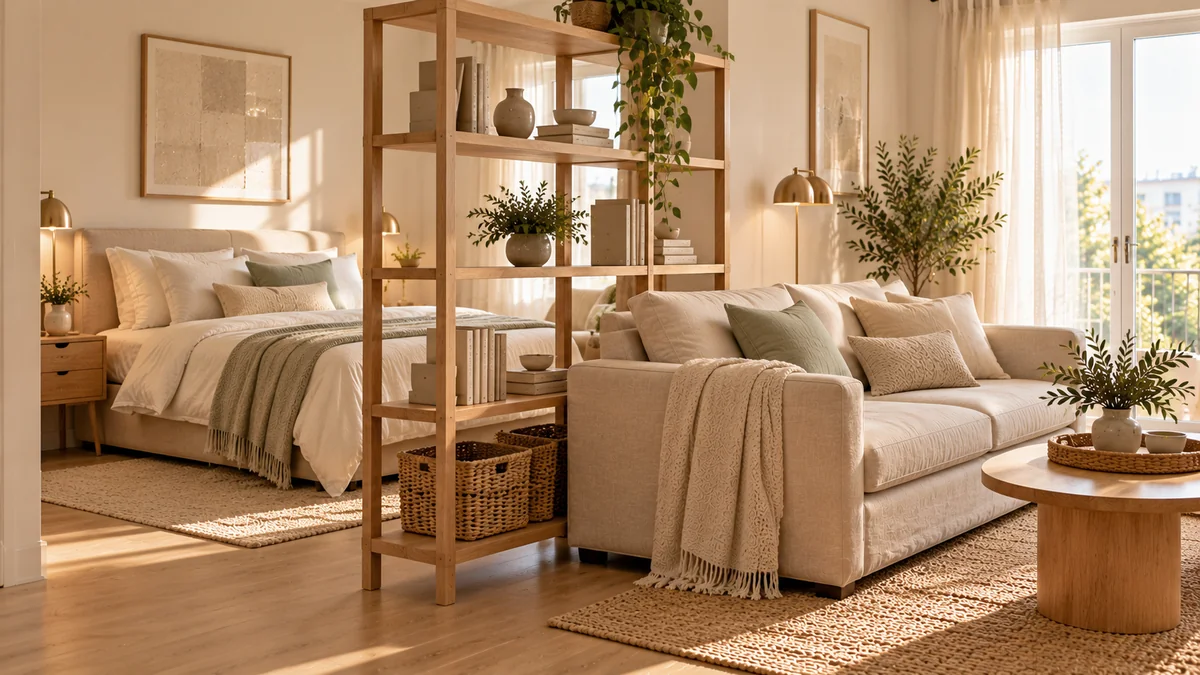
In a studio, an open shelving unit placed perpendicular to the wall separates the bed from the living area while holding books and baskets on both sides. Open backs let light pass through, so the room still feels like one space.
Mistakes to Avoid With Multifunctional Furniture
The promise of a piece that does everything is easy to believe in a store. At home, a few common mistakes turn even good multifunctional furniture for small spaces into a piece nobody uses.
- Measuring only the closed size. Always check the room for the piece in its open position, with space to walk around it.
- Choosing complexity. Furniture with many moving parts breaks more easily and gets used less. Two simple jobs are better than four complicated ones.
- Buying for occasional needs first. Choose the pieces that solve a daily problem, such as a desk or a table, before the ones you will use twice a year.
- Ignoring comfort. A thin sofa bed mattress or a wobbly fold-down table will not be used for long. Test the main job carefully.
Multifunctional Furniture for Small Spaces, Room by Room
Each room asks for a different kind of flexibility. Matching the piece to the room is what makes it useful every day rather than once in a while.
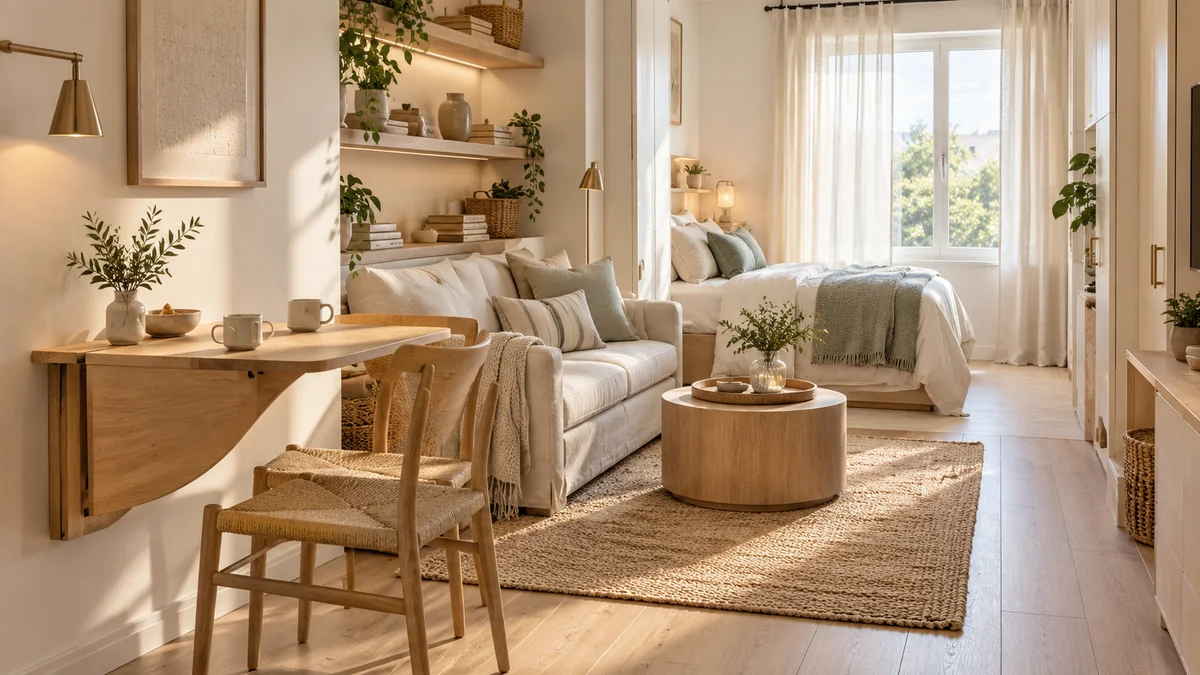
- Studio: a daybed or wall bed, a fold-down table, and an open shelving divider. Together, they create a bedroom, a dining area, and a living room in one space.
- Living room: a sofa bed for guests, a lift-top coffee table for meals and laptop work, and nesting tables that appear only when needed.
- Bedroom: a loft bed with a desk below in a high-ceilinged room, or a secretary desk that closes at night so work stays out of sight.
- Kitchen and dining nook: a drop-leaf table against the wall and stackable stools that tuck under the counter.
- Entry: a bench that is a seat, a shoe shelf, and a place to set a bag down.
The best multifunctional furniture for small spaces always answers the question the room asks most often, whether that is where to sleep a guest, where to eat, or where to work.
Building a Small Home Around Multifunctional Furniture
A home does not need every piece of multifunctional furniture for small spaces on this list. It needs the right two or three, chosen for the way you actually live.
Start with the room that has to do the most. In a studio, it is usually the bed and the table; in a one-bedroom apartment, it is often the living room that also serves as an office and a guest room. Choose one piece of multifunctional furniture for small spaces that solves the biggest conflict, live with it for a few weeks, and only then add the next. For more ways to keep that room calm, see Small Living Room Storage Ideas (Without Adding Clutter).
More Furniture & Storage Guides
Each of these guides focuses on one part of the home:
- Small Space Storage Ideas: The Complete Guide
- Hidden Storage Furniture: Ottomans, Benches, and Beds That Hold More
- Small Entryway Storage Ideas That Keep the Door Clear
- Small Living Room Storage Ideas (Without Adding Clutter)
- Renter-Friendly Storage Ideas: No-Drill Solutions for Every Room
Frequently Asked Questions
What is the best multifunctional furniture for small spaces?
For most homes, a sofa bed or daybed and a drop-leaf or fold-down table make the biggest difference, because they solve the two largest needs: a place to sleep guests and a place to eat or work. A storage ottoman is the easiest and least expensive place to start.
Is a wall bed better than a sofa bed?
A wall bed is usually more comfortable for nightly use, because it holds a regular mattress, but it costs more and must be fixed to the wall. A sofa bed is easier to install and move, and works well for occasional guests.
How much space does a drop-leaf table need?
Closed, about 10 to 14 inches of depth against a wall. Open, plan for the full table plus about 30 to 36 inches around it so chairs can pull out and people can pass.
Does multifunctional furniture for small spaces work in a rental?
Most of it does. Sofa beds, daybeds, drop-leaf tables, nesting tables, ottomans, and benches are all freestanding. Wall beds, fold-down tables, and secretaries usually need screws, so check your lease first.
About the Author
Sofia writes about small-space design the way an editor writes about craft, with an eye trained on light, proportion, and restraint. A believer in Scandinavian minimalism and multifunctional furniture, she built SofiDecor around one conviction: a compact home can carry the same elegance as any grand one, if every choice in it is made on purpose.