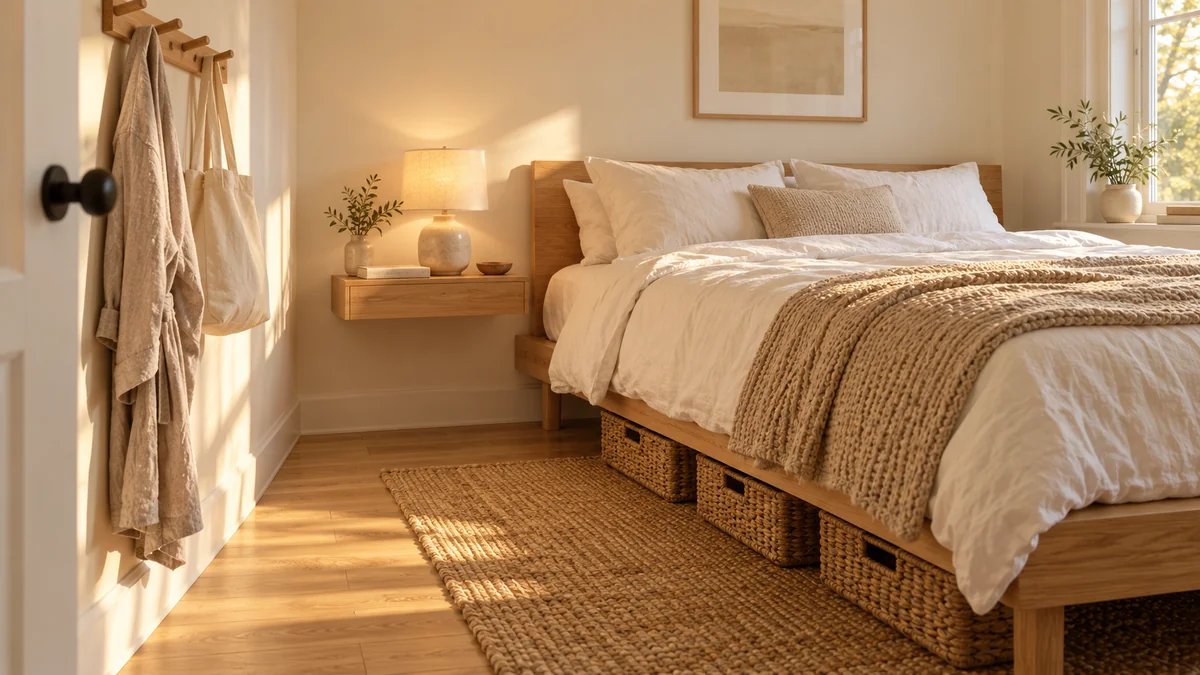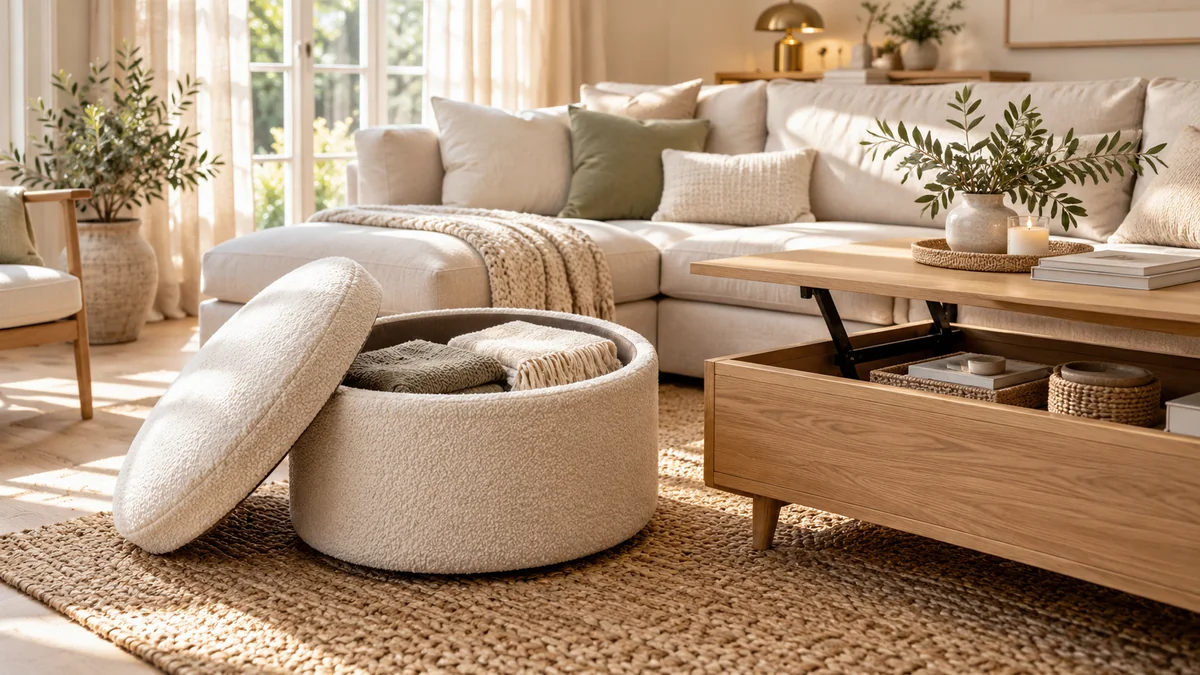
Small Entryway Storage Ideas That Keep the Door Clear
This post may contain affiliate links. If you purchase through one, SofiDecor may earn a small commission at no extra cost to you.
The shoes come off at the door, and that is where they stay. A bag lands on the floor beside them, a coat goes over the nearest chair, and the keys disappear somewhere between the two. By the end of the week, the first few feet of the home have quietly become its most crowded corner. Small entryway storage ideas exist for exactly this moment: the one when you walk in and have nowhere to put anything down.
An entryway does not need to be large to work well. It needs a place for each thing that crosses the threshold every day, and nothing more. This guide gathers 16 ideas, grouped by what they hold, with real measurements for tight spaces and a section for apartments where the front door opens straight into the living room. For storage across the rest of the home, see Small Space Storage Ideas: The Complete Guide.
Small Entryway Storage Ideas at a Glance
Every entry asks the same few questions: where do the shoes go, where do the coats go, where do the keys go. Answer those three, and most of the clutter answers itself.
Use this table to choose the small entryway storage ideas that fit your space. Costs are rough ranges and vary by size, material, and store.
| Zone | Ideas | Cost | Renter-Friendly |
|---|---|---|---|
| Shoes | 1 to 4 | $–$$ | Yes |
| Coats and bags | 5 to 8 | $–$$ | Mostly yes |
| Keys, mail, and small things | 9 to 11 | $ | Yes |
| Behind and above the door | 12 to 13 | $ | Yes |
| No real entryway | 14 to 16 | $–$$ | Yes |
Cost guide: $ = under about $50; $$ = about $50–$200. “Mostly yes” means a few ideas use screws; renter-friendly alternatives are given for each.
Start With What Crosses the Door
Most entryways fail for a simple reason: they are asked to store things that belong somewhere else. The winter boots, the second umbrella, the tote bags kept just in case. None of them is used today, yet all of them take up the space that today’s things need.
Before choosing any of the small entryway storage ideas below, spend a few minutes with what is already there. The most effective small entryway storage ideas start with less. Keep only what you use every day or every week by the door: the shoes in rotation, one coat per person, the bag you carry, keys, and mail. Everything else can move to a closet, under a bed, or into a bin for the season.
Then measure. Note the width of the wall beside the door, the space behind the door when it is open, and the clear path from the door into the home. That path should stay about 30 to 36 inches wide, the same main walkway recommended in every room. Anything that narrows it will feel like clutter, even when it is tidy.
Small Entryway Storage Ideas for Shoes
Shoes are the first thing to pile up and the hardest to hide, because they are used every day and never quite clean. Good small entryway storage ideas for shoes keep them off the floor and out of sight without making them harder to put away.
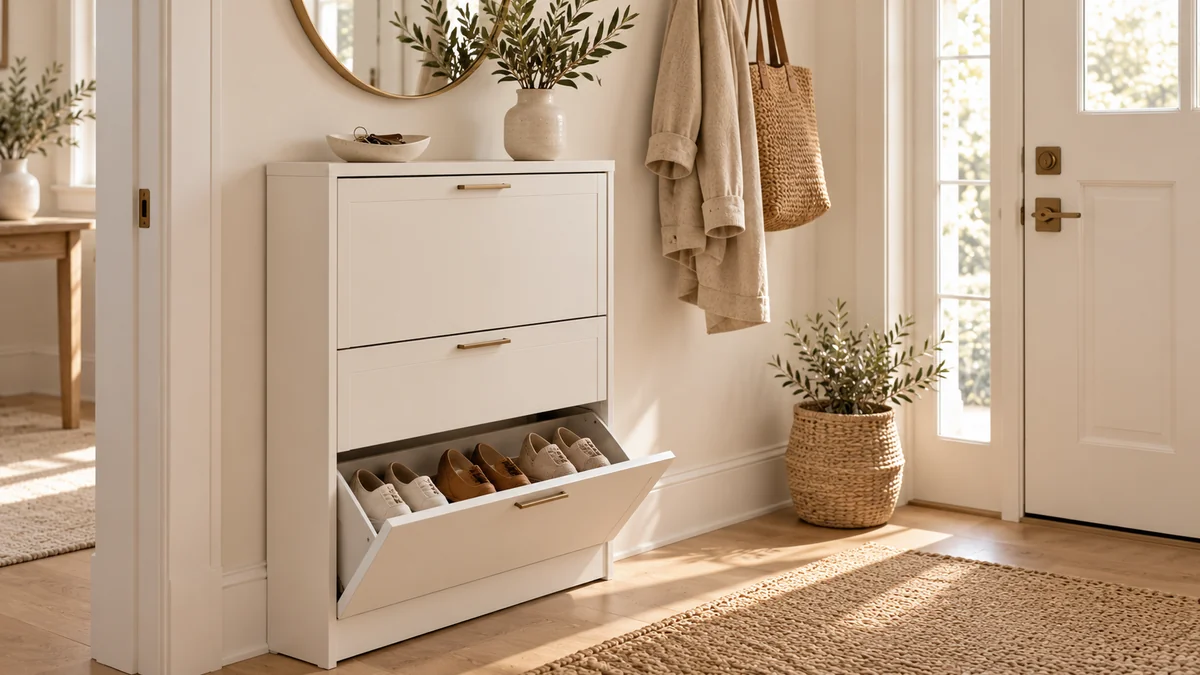
1. A Slim Tip-Out Shoe Cabinet
Tip-out cabinets store shoes at an angle, so they need only about 7 to 10 inches of depth, compared with 12 to 14 inches for a standard shoe rack. The top doubles as a narrow surface for keys and mail. Because they are tall and shallow, they must be secured to the wall; the Anchor It campaign from the U.S. Consumer Product Safety Commission explains how.
2. A Storage Bench With a Shoe Shelf
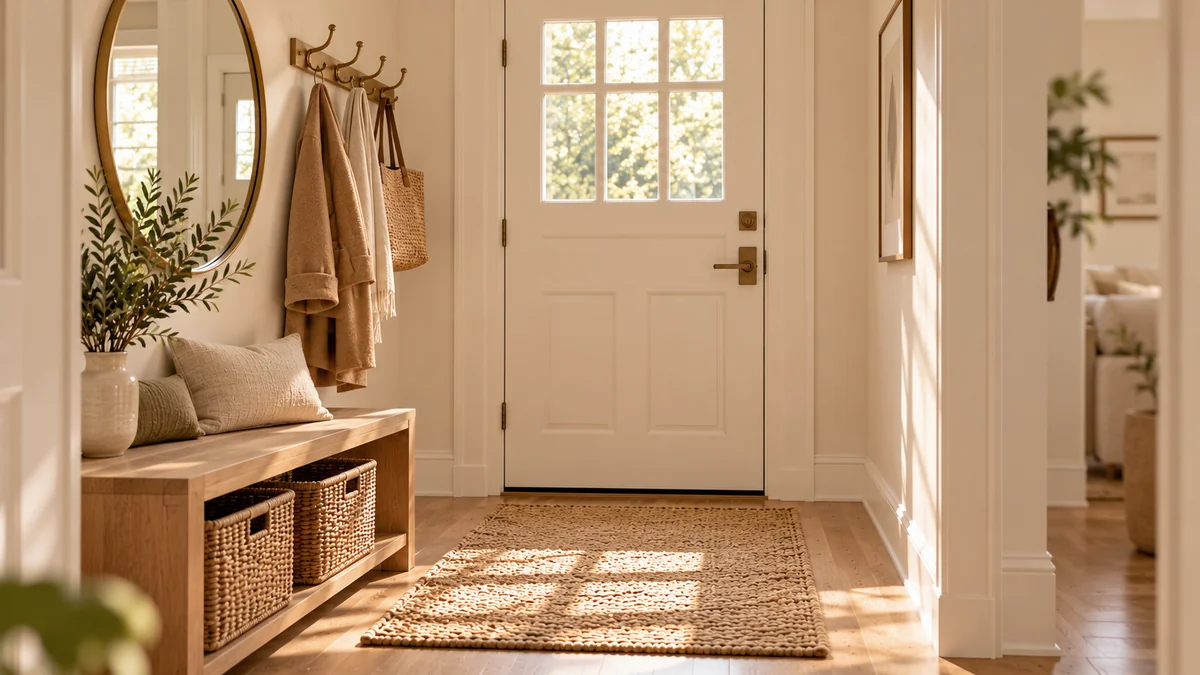
A bench gives you a place to sit while you take shoes off and a shelf underneath to put them away. A depth of about 14 to 18 inches keeps the entry clear for walking. Choose one with an open lower shelf for everyday pairs and baskets for the rest. For benches with a lift-up seat, see Hidden Storage Furniture: Ottomans, Benches, and Beds That Hold More.
3. A Boot Tray by the Door
A simple tray catches water, mud, and snow before they reach the floor. A rubber or metal tray about 15 by 30 inches holds two to four pairs. Add a layer of smooth stones to let boots drain and dry, and the tray becomes almost decorative.
4. Baskets With a One-Pair Rule
One basket per person, holding one or two pairs each, keeps shoes contained without a large piece of furniture. When a basket is full, a pair goes back to the closet. Woven baskets with a sturdy base slide easily under a bench or console.
Coats, Bags, and Everything That Hangs
The things that hang by the door are bulky, and bulk is what makes a narrow space feel narrower. Hanging them well means using the wall instead of the floor, and choosing fewer hooks rather than more. Of all small entryway storage ideas, a row of hooks is the simplest place to start.
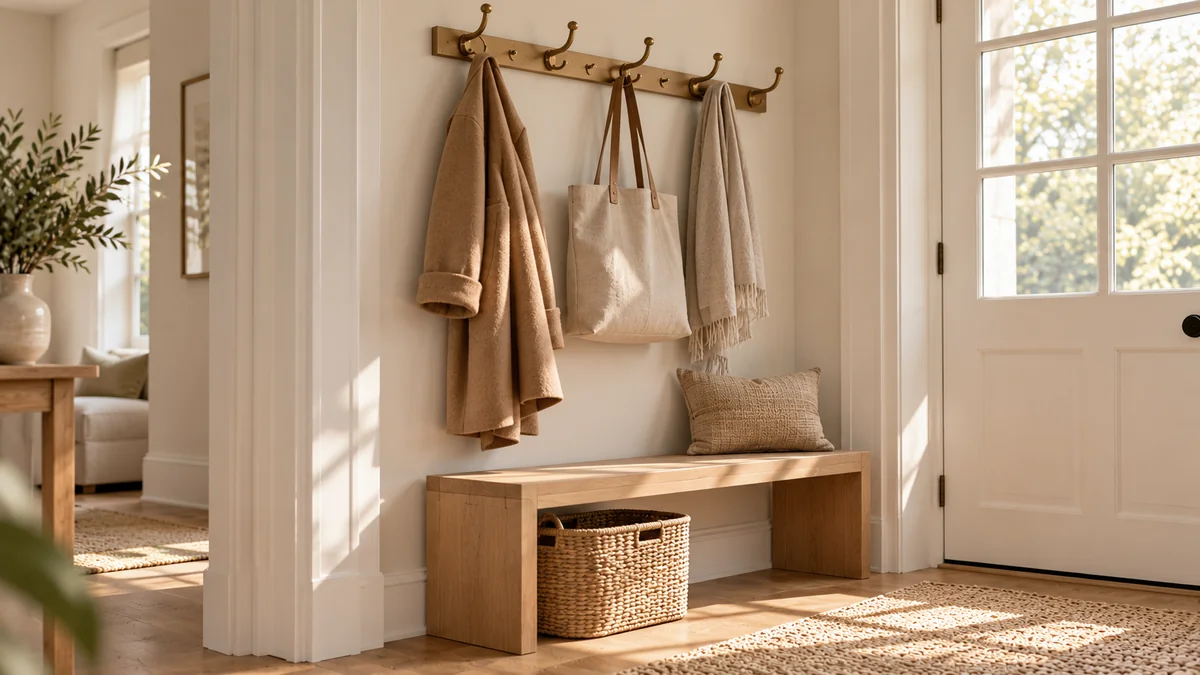
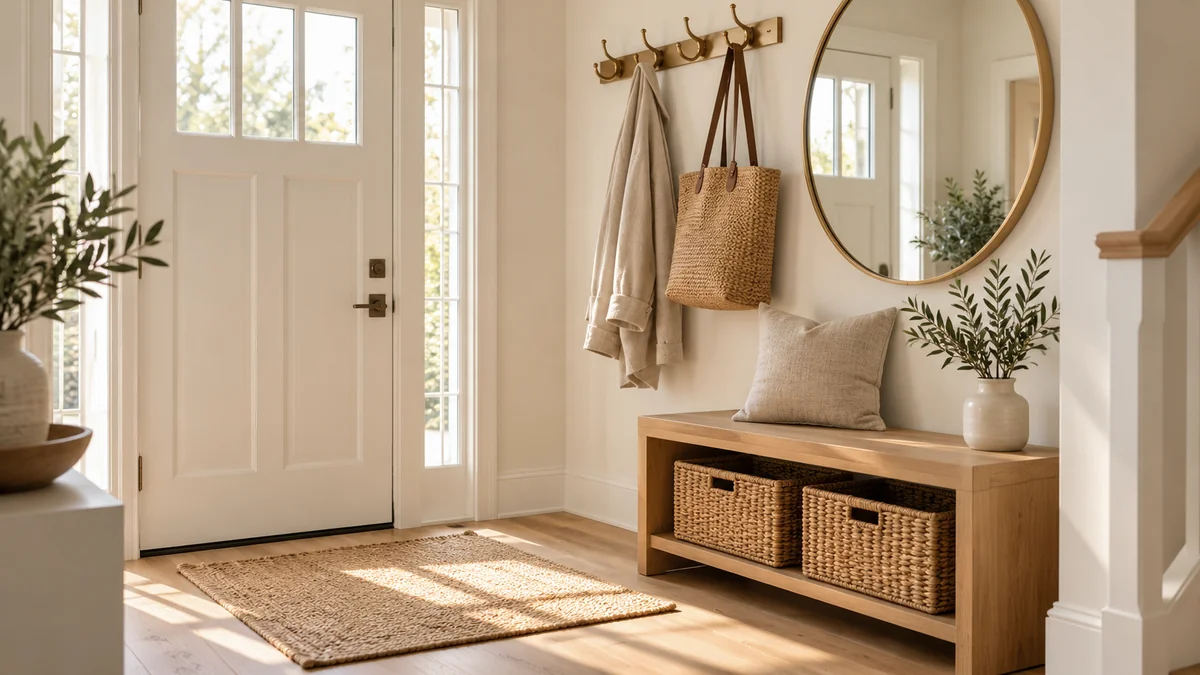
5. A Single Row of Wall Hooks
A row of four to six hooks holds the coats and bags in daily use. Mount adult hooks at about 60 to 66 inches from the floor, and a second, lower row at about 36 to 48 inches for children. Leave about 8 to 10 inches between hooks so coats do not overlap into one heavy shape.
6. A Hook Rail With a Shelf
A rail with a shelf above it adds a place for hats, gloves, and small baskets. A shelf depth of about 6 to 10 inches holds what you need without hitting your head as you pass. Keep the shelf for things you reach for every day, and it will stay tidy.
7. A Freestanding Coat Rack
When screws are not an option, a slim coat tree or a ladder rack holds coats and bags without touching the wall. Choose one with a weighted base and a footprint of about 15 to 20 inches, and place it in a corner where it will not be bumped by the door.
8. Adhesive Hooks for Light Things
Strong removable hooks hold keys, dog leashes, and light bags without drilling. Check the weight limit on the package and keep heavy coats on a rack or rail. They are one of the easiest small entryway storage ideas for renters.
Keys, Mail, and the Small Things
The smallest items cause the most daily frustration, because they are the ones you need at the moment you are leaving. Giving them one fixed place turns a search into a habit, and the small entryway storage ideas for keys and mail cost almost nothing.
9. A Wall-Mounted Key Shelf
A small shelf with hooks underneath holds keys on the hooks and sunglasses, a wallet, or a phone on top. Mount it at eye level, about 48 to 60 inches high, so it is the first thing you see on the way out.
10. A Mail Sorter With Two Slots
Mail is the paper clutter that arrives every day. A wall sorter with two slots, one for incoming and one for outgoing, stops it from spreading. Recycle obvious junk mail before it ever reaches the slot.
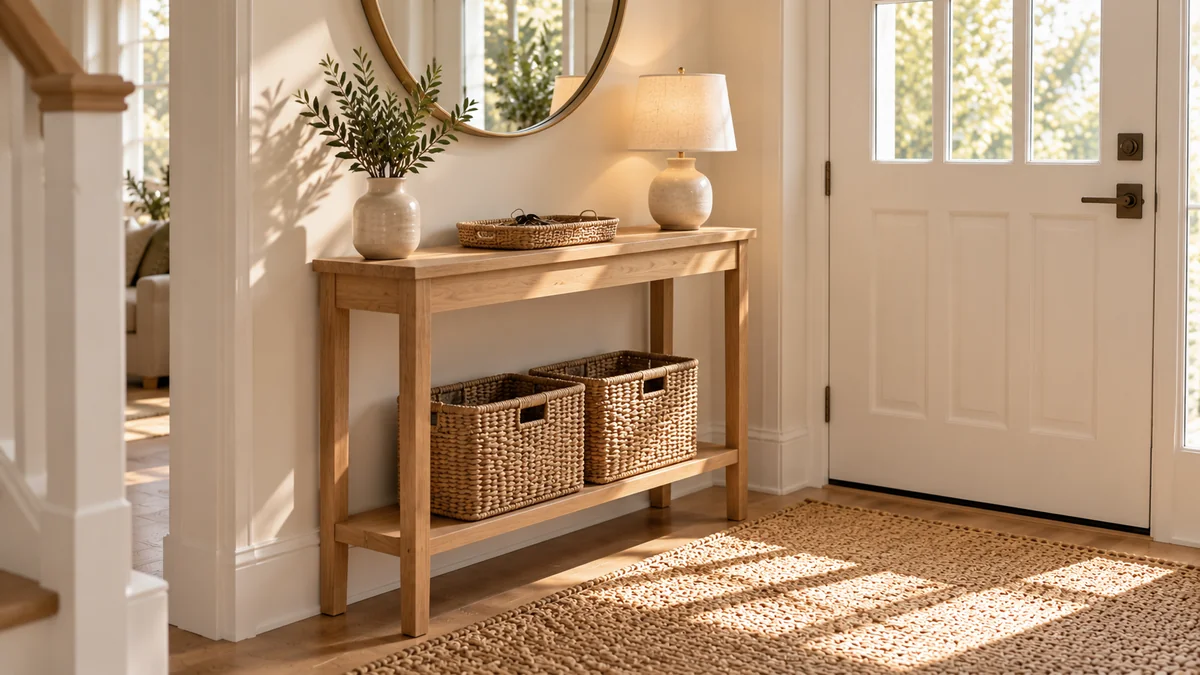
11. A Narrow Console With a Catchall Tray
A console table about 10 to 14 inches deep fits most entryways and gives you a surface to drop things on. A single tray or shallow bowl on top keeps that surface from filling up. Choose one with a drawer or a lower shelf for baskets.
The entry is also a natural place for a few emergency essentials: a flashlight, a spare phone charger, and a small first-aid kit. Ready.gov’s guide to building a kit lists what to keep together.
Small Entryway Storage Ideas Behind and Above the Door
Two spaces in every entry are almost always empty: the back of the door and the wall above the hooks. Both can hold a surprising amount without taking a single step of floor, which makes them some of the most useful small entryway storage ideas for renters.
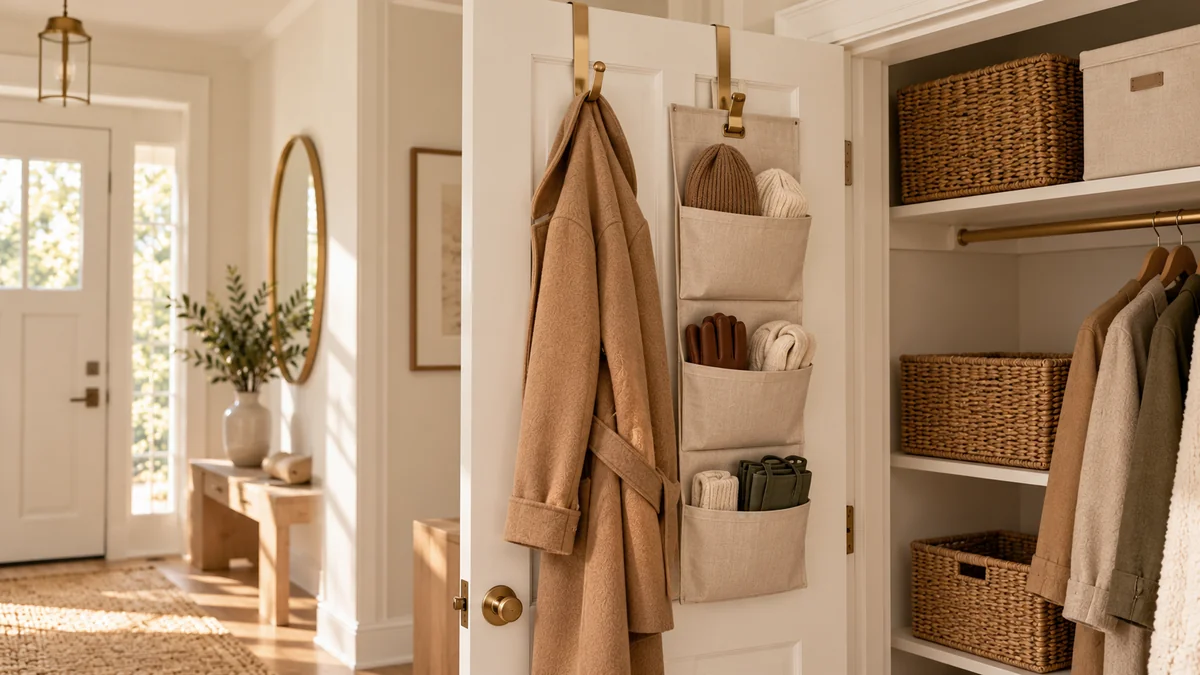
12. An Over-the-Door Organizer
A clear pocket organizer hung on the back of a closet door holds gloves, hats, sunscreen, and reusable bags. Over-the-door hooks hold a coat or two without screws. Check that the door still closes fully once the organizer is filled.
13. A High Shelf for Seasonal Items
A shelf mounted about 12 inches above the hooks holds lidded boxes for winter accessories in summer and sun hats in winter. Matching boxes keep it calm to look at, and labels make it easy to find things in them.
When There Is No Real Entryway
Many apartments have no entryway at all. The front door opens straight into the living room, and the first piece of furniture you see is the sofa. The goal here is to create the feeling of an entry without building one. Small entryway storage ideas still work in this case; they simply need a clear edge to belong to.
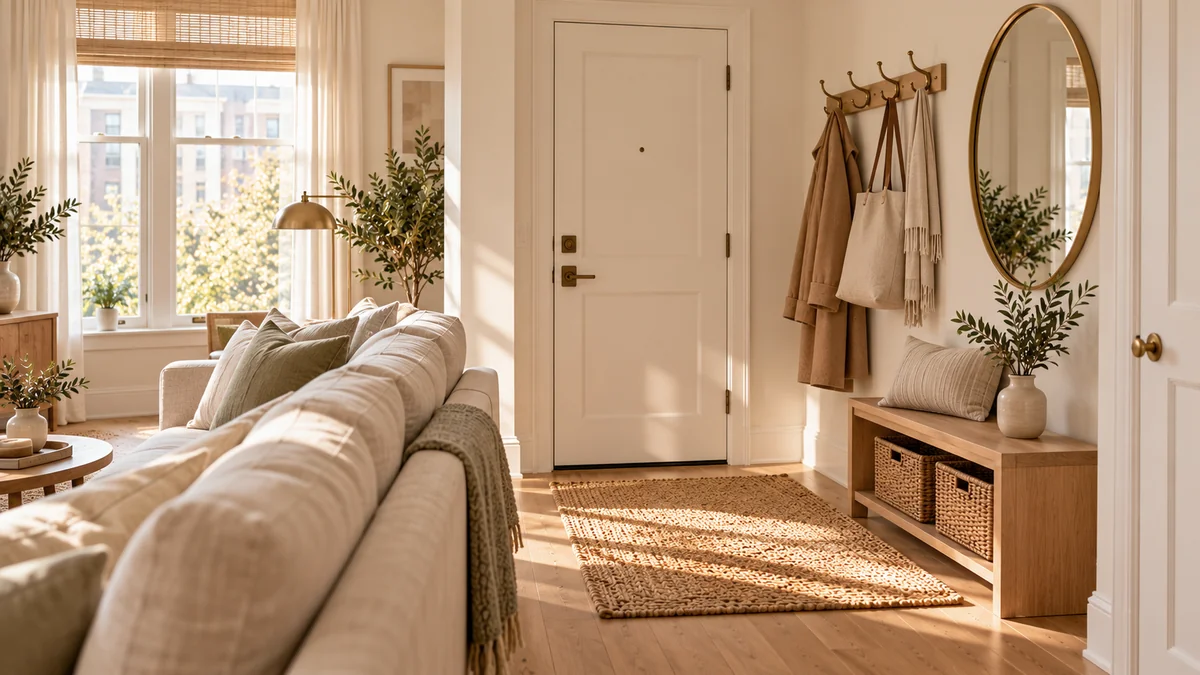
14. Define the Zone With a Rug
A small rug, about 2 by 3 feet or a runner about 2 by 5 feet, marks where the entry begins and the living room ends. Choose a low-pile, washable rug so the door can swing over it and dirt stays near the door.
15. Use the Back of the Sofa
If the sofa faces away from the door, a narrow console placed behind it becomes an entry table. It holds a tray for keys and a basket for shoes underneath, and it divides the space without adding a wall.
16. A Wall Cabinet With a Mirror
A shallow cabinet with a mirrored door, mounted beside the front door, hides keys, mail, and small things while giving you a last look before leaving. A mirror also brings light into a dark corner, which helps a small entry feel more open.
Common Mistakes in a Small Entryway
Most entryway problems come from good intentions: one more hook, one more basket, one more piece of furniture that seemed useful in the store. Each addition makes sense alone; together, they close the door in.
- Choosing furniture that is too deep. A standard dresser or shoe rack can be 16 inches deep or more. In a narrow entry, choose pieces under about 14 inches, and slim tip-out cabinets where you can.
- Adding hooks without editing. Twelve hooks will hold twelve coats. Four to six hooks keep the wall, and the habit, under control.
- Blocking the door swing. Check that the door opens fully before placing a bench, rack, or rug. A door that catches on furniture every day turns the entry into an obstacle.
- Using the floor as storage. Bags and boxes left on the floor are the first thing that makes an entry feel cramped. The best small entryway storage ideas lift everything off the floor or tuck it under a single piece.
Keep the Entry Calm Every Day
An entryway stays organized only if it is easy to keep that way. Even the best small entryway storage ideas fail when the system takes more effort to use than the floor does.
- One place for each thing. Keys on the hook, mail in the slot, shoes in the basket. When every item has a fixed home, putting it away takes seconds.
- A weekly reset. Once a week, move shoes that are not in rotation back to the closet, clear the mail, and empty the tray.
- A seasonal swap. When the weather changes, change what lives by the door. Winter boots and heavy coats go away in spring.
- A quiet palette. Baskets, hooks, and boxes in the same few materials, such as oak, jute, and brushed brass, make even a full entry look calm.
More Furniture & Storage Guides
Each of these guides focuses on one part of the home:
- Small Space Storage Ideas: The Complete Guide
- Hidden Storage Furniture: Ottomans, Benches, and Beds That Hold More
- Small Living Room Storage Ideas (Without Adding Clutter)
- Best Multifunctional Furniture for Small Spaces
- Renter-Friendly Storage Ideas: No-Drill Solutions for Every Room
Frequently Asked Questions
How do I add storage to a very small entryway?
Use the wall before the floor. A row of hooks, a slim tip-out shoe cabinet about 7 to 10 inches deep, and a small key shelf hold most daily things while keeping the path from the door about 30 to 36 inches wide.
Where do I put shoes if I have no room for a shoe rack?
Try a boot tray by the door for the pairs you wear most, and one basket per person under a bench or console. Keep only one or two pairs each by the door and store the rest in a closet.
How high should entryway hooks be?
About 60 to 66 inches from the floor for adults, and about 36 to 48 inches for children. Leave about 8 to 10 inches between hooks so coats do not overlap.
What are the best small entryway storage ideas for renters?
Freestanding pieces and no-drill fixes: a storage bench, a coat rack with a weighted base, adhesive hooks for light items, an over-the-door organizer, and a washable rug to define the zone. All of them leave with you when you move.
About the Author
Sofia writes about small-space design the way an editor writes about craft, with an eye trained on light, proportion, and restraint. A believer in Scandinavian minimalism and multifunctional furniture, she built SofiDecor around one conviction: a compact home can carry the same elegance as any grand one, if every choice in it is made on purpose.