Small Living Room Storage Ideas (Without Adding Clutter)
This post may contain affiliate links. If you purchase through one, SofiDecor may earn a small commission at no extra cost to you.
The coffee table disappeared sometime in the spring. It is still there, somewhere under the mail, two chargers, a stack of books you meant to finish, and the remote that is never where you left it. The living room is the room where everyone spends the most time, and so it is the room that quietly collects the most. Small living room storage ideas are not about hiding a life; they are about giving each part of it a place to rest.
A small living room cannot afford furniture that only does one thing, and it cannot afford a floor covered in baskets either. The answer is almost always higher, quieter, and more deliberate than it first seems. This guide gathers 15 ideas, grouped by where they live in the room, along with how to keep open storage from looking busy. For storage across the rest of the home, see Small Space Storage Ideas: The Complete Guide.
Small Living Room Storage Ideas at a Glance
A living room holds more categories of things than any other room: books, media, blankets, paper, toys, hobbies. Seeing them all in one place is the first step to giving each one a home.
Use this table to choose the small living room storage ideas that fit your space. Costs are rough ranges and vary by size, material, and store.
| Zone | Ideas | Cost | Renter-Friendly |
|---|---|---|---|
| Walls | 1 to 4 | $–$$$ | Check lease (screws) |
| Around the sofa | 5 to 8 | $–$$$ | Yes |
| Corners and awkward spots | 9 to 12 | $–$$ | Mostly yes |
| Baskets and boxes | 13 to 15 | $ | Yes |
Cost guide: $ = under about $50; $$ = about $50–$200; $$$ = over about $200. “Check lease” means the idea usually involves screws; freestanding alternatives are given where possible.
Edit the Room Before You Store
A living room rarely has too little storage; it has too many things that drifted in from other rooms. The shoes from the entry, the laundry on its way upstairs, the paperwork that belongs at a desk. Each one takes a little space, and together they take the room.
Before choosing any of the small living room storage ideas below, sort what lives in the room into three groups: what is used here every day, what is used here sometimes, and what belongs somewhere else. Return the third group to its own room first. Then count what remains, by category, and you will know exactly how much storage you need.
A simple rule keeps the room from refilling: everything that stays in the living room must have a named place, such as the basket for throws or the drawer for chargers. Things without a place are the ones that end up on the coffee table.
Small Living Room Storage Ideas for the Walls
When the floor is already full, the walls are the most generous space left in the room. Small living room storage ideas that rise instead of spread keep the floor clear, and a clear floor is what makes a small living room feel larger.
1. One Wall of Floor-to-Ceiling Shelves
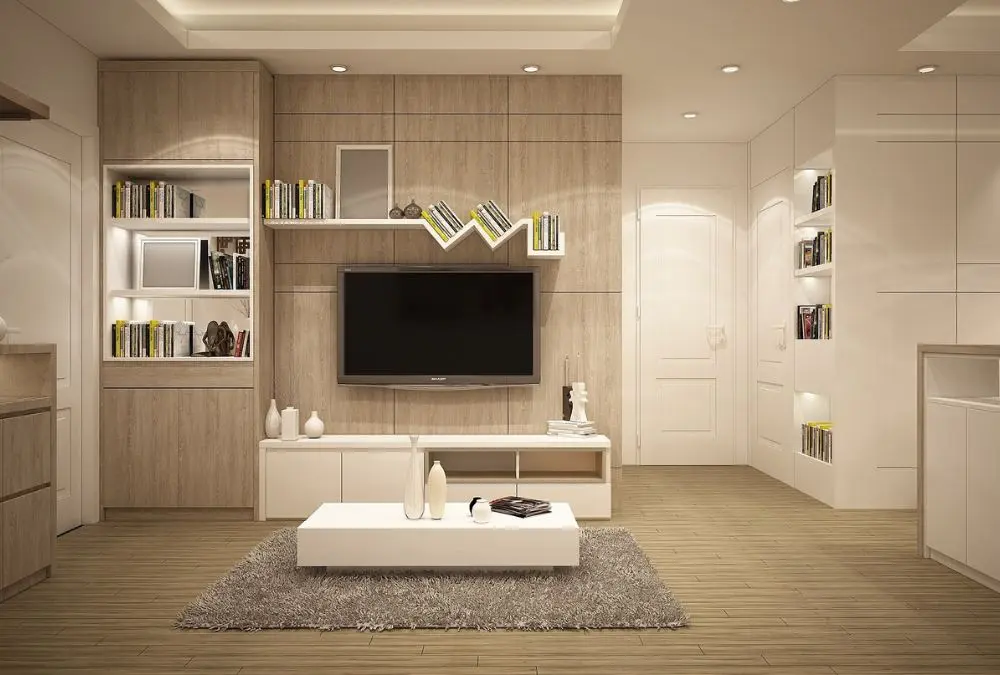
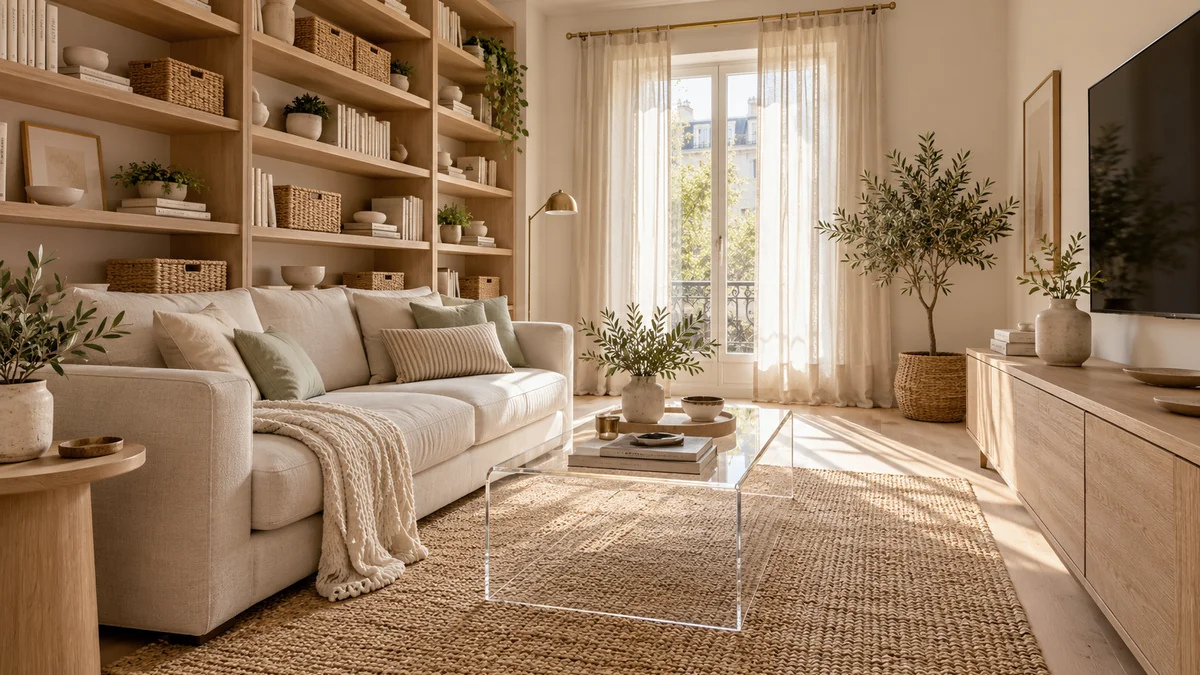
A single wall of shelving holds more than several small pieces of furniture spread around the room, and it reads as one calm surface instead of many. Of all small living room storage ideas, it is the one that changes the room most. A depth of about 10 to 12 inches fits most books and baskets without crowding the room. Tall freestanding shelves must be secured to the wall; the Anchor It campaign from the U.S. Consumer Product Safety Commission explains how.
2. Floating Shelves Above the Sofa
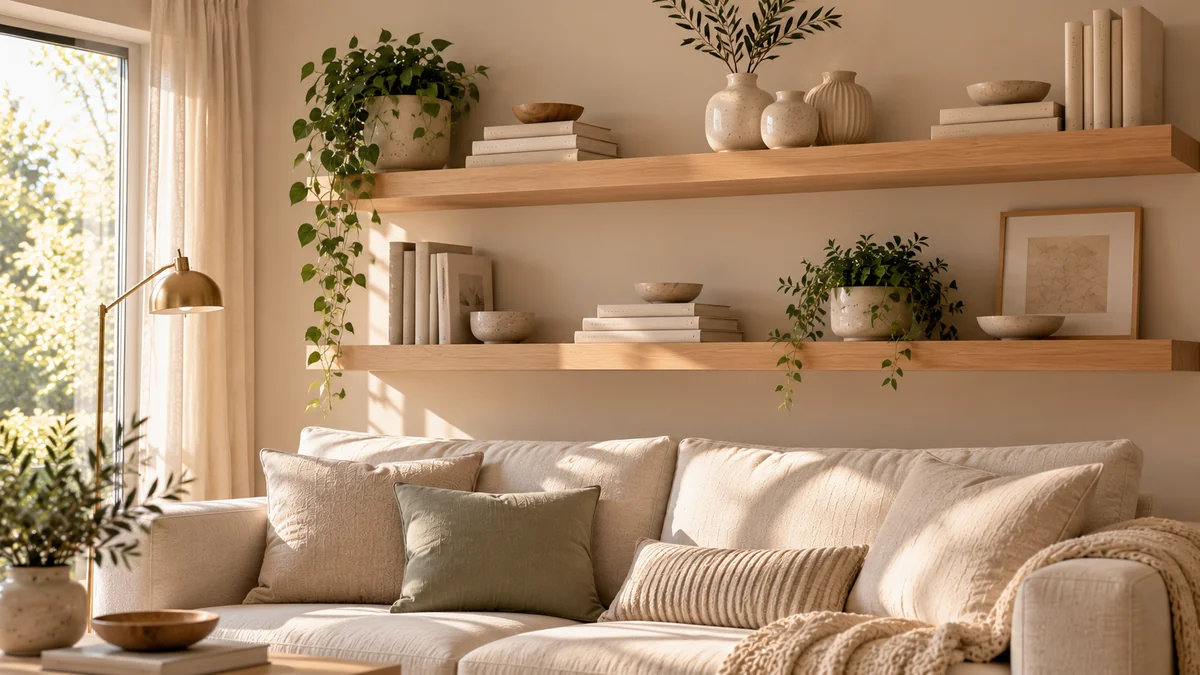
The wall above the sofa is often empty or holds a single picture. Two long floating shelves, about 6 to 10 inches deep and mounted at least 10 to 12 inches above the top of the sofa back, hold books and a few objects without anyone hitting their head when they sit down.
3. A Wall-Mounted Media Unit
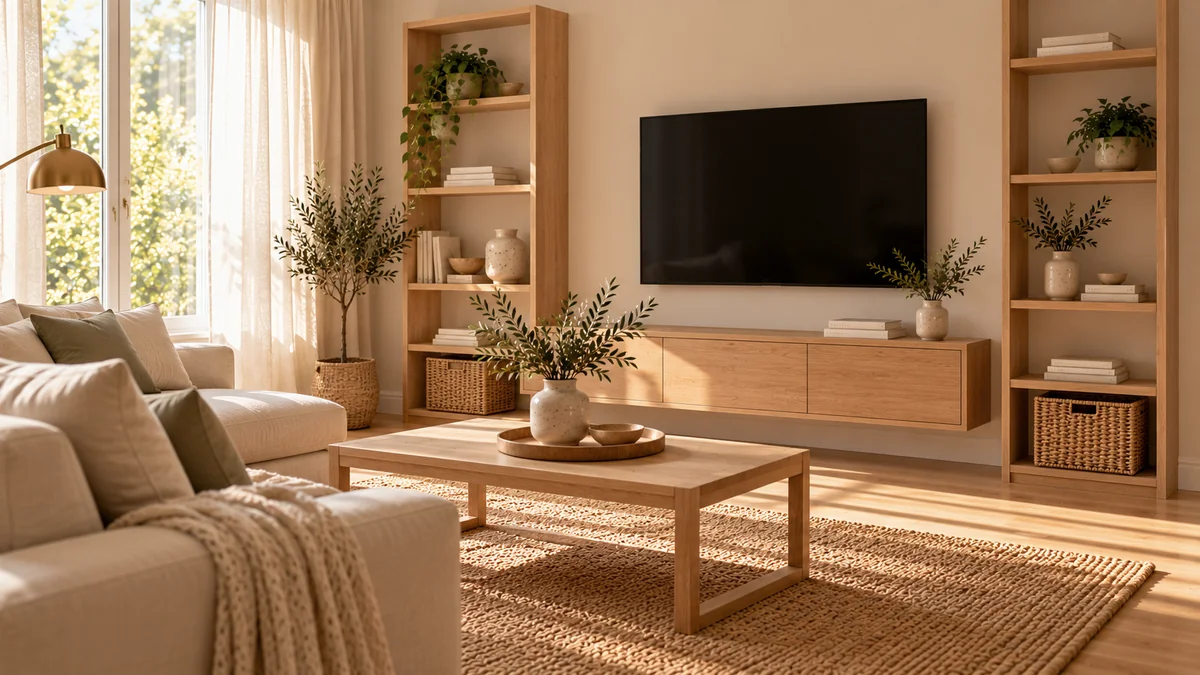
Mounting the television and a slim cabinet on the wall frees the floor beneath it. Choose a cabinet with doors to hide devices and cables, and keep it about 16 to 18 inches deep, enough for most media boxes. A floating unit also makes cleaning the floor easier.
4. Picture Ledges for Books and Records
Narrow ledges, about 3 to 5 inches deep, display books face-out and hold records, small frames, or a plant. They take almost no depth from the room, and they turn everyday objects into something you enjoy seeing.
Storage Around the Sofa
The sofa is the center of the room, and everything you use in the evening ends up within arm’s reach of it. Small living room storage ideas placed around the sofa catch those things before they reach the coffee table.
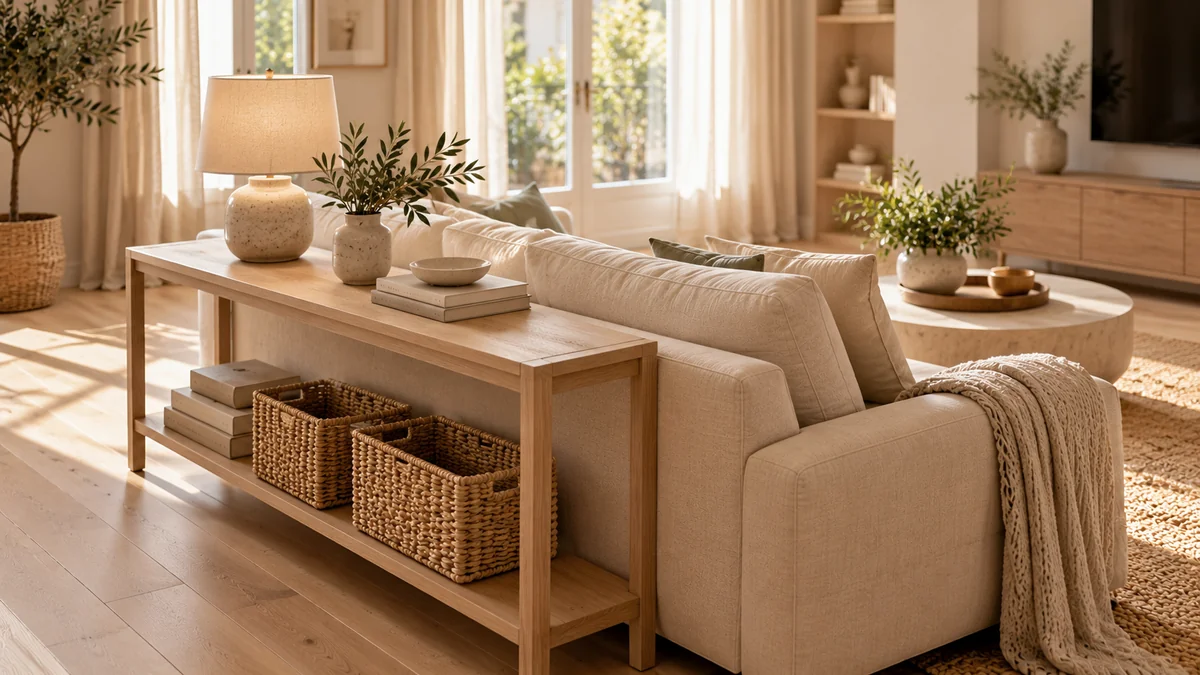
5. A Console Behind the Sofa
If the sofa floats in the room rather than sitting against a wall, a narrow console behind it adds a surface for a lamp and baskets underneath for throws and magazines. A depth of about 10 to 14 inches is enough.
6. Shelves on Both Sides of the Sofa
Two narrow bookcases on either side of the sofa frame it like built-ins and hold far more than two side tables. Keep them about 10 to 12 inches deep and leave a few inches between them and the sofa arm so the room does not feel squeezed.
7. A Sofa Arm Caddy or C-Table
A small C-shaped table slides over the sofa seat or arm and holds a drink, a book, and a phone. An arm caddy with side pockets keeps the remote and reading glasses in one place. Both replace the need for a full side table.
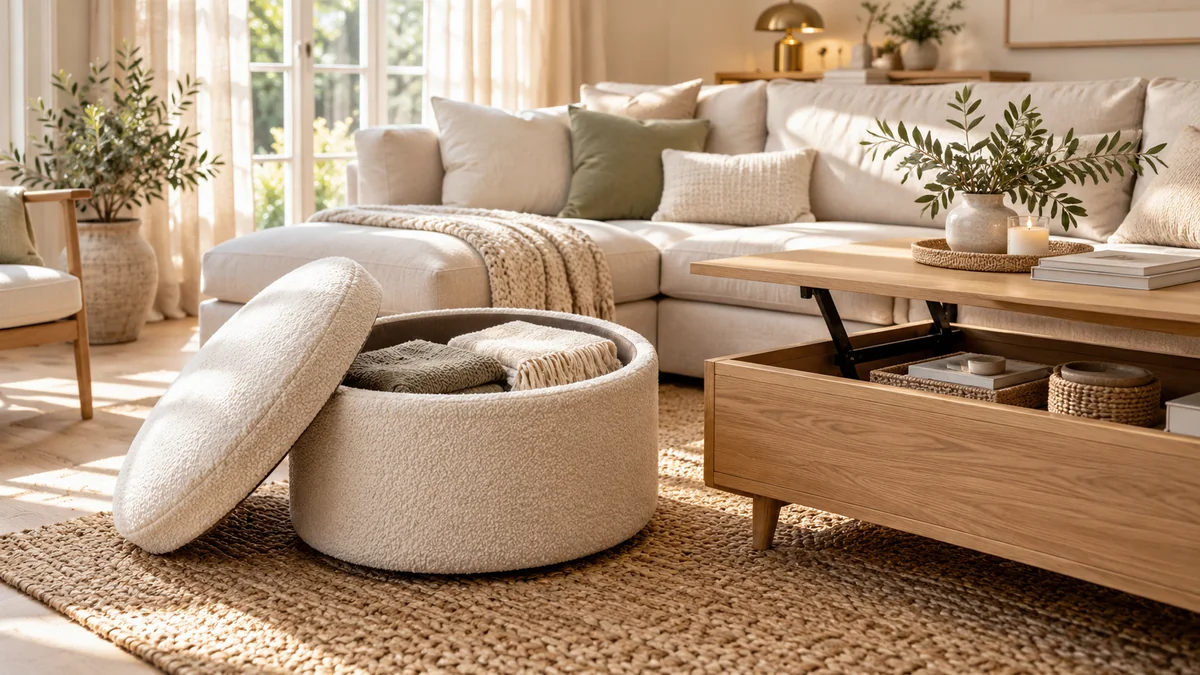
8. A Storage Ottoman or Lift-Top Table
Furniture with a lid or a drawer turns the center of the room into storage without looking like it. For the best pieces and what to check before buying, see Hidden Storage Furniture: Ottomans, Benches, and Beds That Hold More.
Corners and Awkward Spots
Every small living room has a few places nobody quite knows what to do with: a corner, the space under a window, the wall around a door. These are often the last free storage in the room, and some of the most overlooked small living room storage ideas begin here.
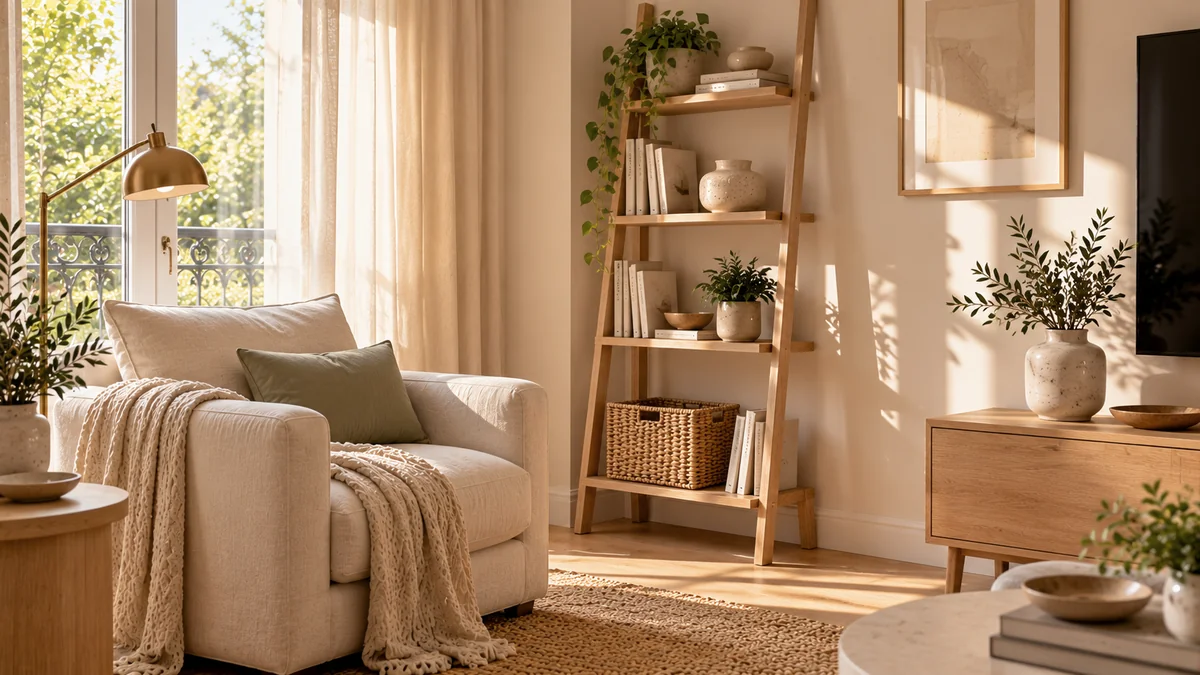
9. A Corner Shelf or Ladder Shelf
Corner shelves are among the easiest small living room storage ideas to add. They fit into the angle that a square piece of furniture would waste. A leaning ladder shelf is another option that needs no screws, with shelves that get shallower toward the top so it looks light against the wall.
10. A Low Cabinet Under the Window
A low cabinet or bench about 16 to 20 inches deep under a window holds games, photo albums, and blankets, and the top becomes a seat or a surface for plants. Keep it below the windowsill so the light stays open.
11. Shelves Around a Doorway
A shelf mounted above a doorway, with narrow shelves running down one side, uses wall space that is almost always empty. It works well for books you have read and want to keep, but do not need every day.
12. Built-Ins in a Niche or Alcove
Alcoves on either side of a chimney breast or a structural column are natural places for shelves or cabinets. Even a freestanding cabinet that fits the width of the niche looks almost built in.
Baskets, Boxes, and Closed Storage
Open shelves only stay calm if most of what they hold is out of sight. Baskets and boxes are what make the difference between a library and a pile, which is why they appear in almost every list of small living room storage ideas.
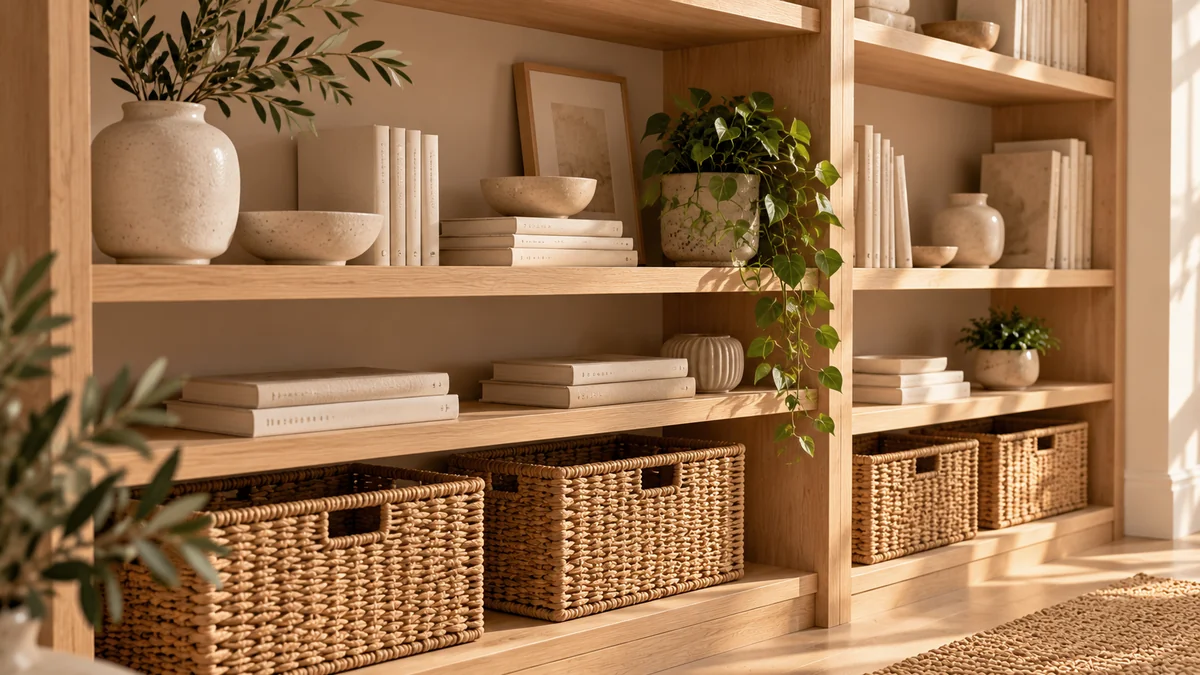
13. Matching Baskets on the Lower Shelves
Put baskets or lidded boxes on the lower shelves and keep books and a few objects on the upper ones. Matching baskets in one or two materials, such as woven jute or linen, make a full shelf look orderly from across the room.
14. One Basket for Each Category
One basket for throws, one for toys, one for chargers and cables. When each basket holds only one kind of thing, putting things away takes seconds, and the end-of-day reset becomes a habit.
15. A Closed Cabinet for Paper and Cables
Paper and cables are the clutter that looks worst on display. A small cabinet with a drawer for mail and a charging station inside, with a hole in the back for the power strip, keeps both out of sight.
How to Style Open Storage So It Looks Calm
Storage you can see becomes part of the decor, whether you plan it or not. A few simple rules keep shelves looking intentional rather than full, and they apply to every one of the small living room storage ideas above.
- Leave a third empty. Shelves filled about two-thirds of the way look generous; shelves filled to the edges look crowded.
- Repeat materials. Choose two or three materials, such as light oak, jute, and ceramic, and repeat them across the room.
- Group in odd numbers. Three objects together look more natural than two or four.
- Keep the palette quiet. Book spines and baskets in warm, muted tones blend into the wall instead of competing with it.
Common Mistakes With Small Living Room Storage
Even good small living room storage ideas can fail when a good purchase lands in the wrong place. A few small habits make a large difference.
- Buying storage before editing. A new bookcase filled with things you no longer want only gives clutter a nicer home.
- Too many small pieces. Four little side tables and shelves look busier than one larger piece that holds the same amount.
- Blocking the walkway. Keep the main path through the room about 30 to 36 inches wide, and about 16 to 18 inches between the sofa and the coffee table.
- Everything open, nothing closed. The best small living room storage ideas mix open shelves with baskets, drawers, or doors, so the room has places to rest the eye.
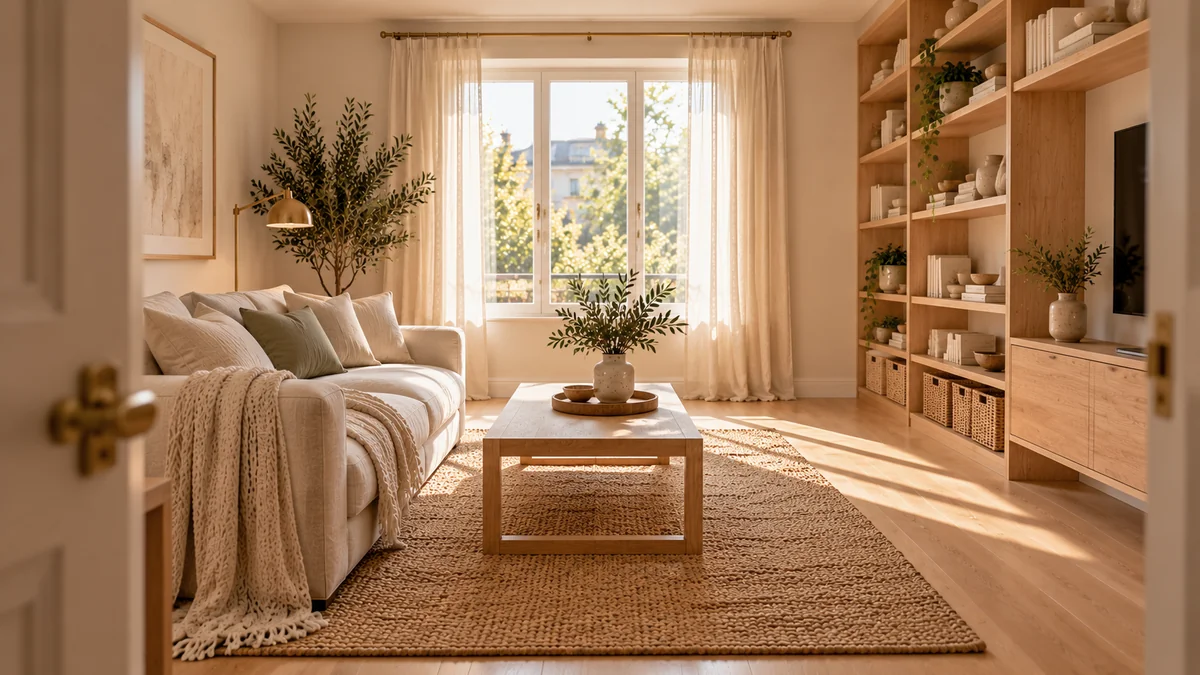
A Simple Plan for Your Small Living Room
The best storage plan is the one you can begin this weekend. A living room does not need to change all at once; it needs one decision at a time, in the right order.
- Edit. Return everything that belongs in another room, and let go of what you no longer use.
- Choose one wall. Decide which wall will carry most of the storage, so the rest of the room can stay light.
- Add closed storage first. A cabinet, an ottoman, or a set of baskets gives the most visible clutter a home right away.
- Add open shelves last. Fill them two-thirds full, with books and a few objects you love.
Start with the pile you see most often, whether it is the coffee table, the corner, or the floor beside the sofa. Among all the small living room storage ideas in this guide, the right first step is always the one that clears the surface you look at every evening.
More Furniture & Storage Guides
Each of these guides focuses on one part of the home:
- Small Space Storage Ideas: The Complete Guide
- Hidden Storage Furniture: Ottomans, Benches, and Beds That Hold More
- Small Entryway Storage Ideas That Keep the Door Clear
- Best Multifunctional Furniture for Small Spaces
- Renter-Friendly Storage Ideas: No-Drill Solutions for Every Room
Frequently Asked Questions
How can I add storage to a small living room without making it feel crowded?
Use the walls before the floor. One wall of shelves, floating shelves above the sofa, and a wall-mounted media unit hold a lot while keeping the floor clear. Fill shelves only about two-thirds full and use matching baskets for the rest.
Where do I store blankets in a small living room?
In a storage ottoman, a lidded basket beside the sofa, or a low cabinet under the window. Keep one or two throws out and store the rest so the sofa does not turn into a pile.
How do I hide cables and devices in a small living room?
Choose a media unit with doors and a cut-out at the back for cords, and gather chargers in one closed cabinet or drawer with a power strip inside. Cable clips along the back of the furniture keep cords off the floor.
What are the best small living room storage ideas for renters?
Freestanding pieces that move with you: a leaning ladder shelf, bookcases secured with a single anchor, a console behind the sofa, a storage ottoman, and baskets. Check your lease before mounting shelves or a media unit on the wall.
About the Author
Sofia writes about small-space design the way an editor writes about craft, with an eye trained on light, proportion, and restraint. A believer in Scandinavian minimalism and multifunctional furniture, she built SofiDecor around one conviction: a compact home can carry the same elegance as any grand one, if every choice in it is made on purpose.