Small Space Storage Ideas: The Complete Guide
The apartment was supposed to feel lighter by now. You have donated the extra dishes, folded the towels twice as small, and stacked the boxes as neatly as boxes can be stacked, and still every room reads as one delivery away from spilling over. Small space storage ideas rarely fail because a home has too many belongings. They fail because storage gets treated as an afterthought, something bought in a hurry rather than built around how a room is actually used.
The apartments that feel calm despite their size are not the ones with the least in them. They are the ones where everything already has somewhere to be.
What Makes Small Space Storage Ideas Actually Work?
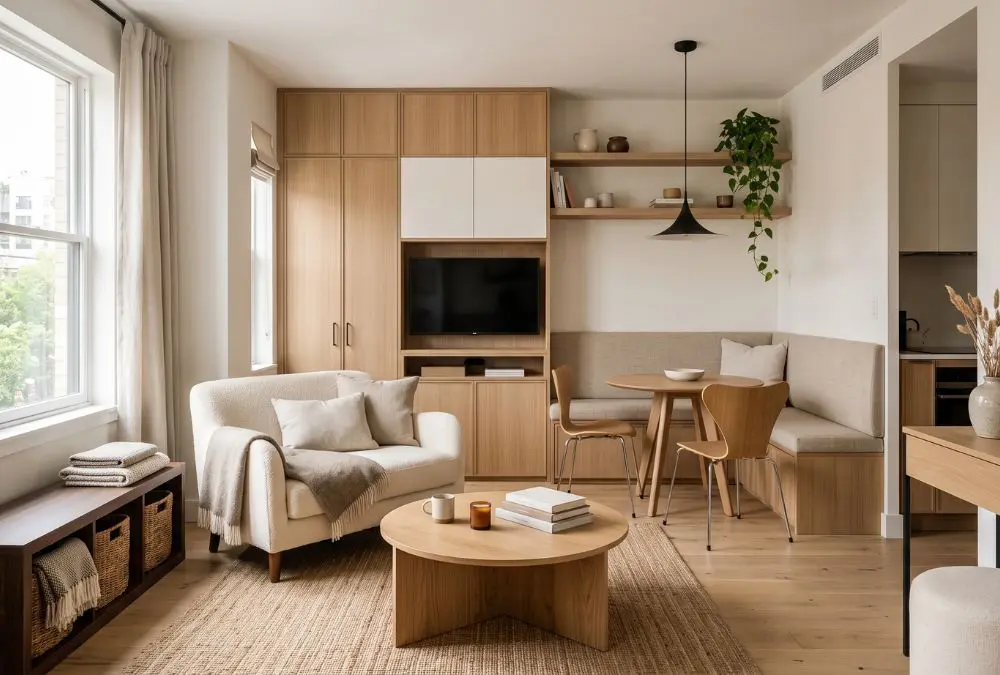
Storage that works is rarely about capacity. It is about matching where something lives to how often it gets reached for, so the objects used daily stay in view and the objects used twice a year stop taking up a room’s best real estate. A small space forgives very little of this kind of mismatch, which is exactly why getting it right matters more here than it would in a much larger home. The best small space storage ideas are built around this exact logic, room by room.
There is also a quieter psychological reason this matters. A room where storage is mismatched forces the eye to keep noticing what is out of place, which reads as visual noise even when the space is technically tidy. A room where every object has an obvious, logical home lets the eye rest, which is a large part of why some small apartments feel expansive and calm while others of the same square footage feel like they are working against their owner.
The specific fixes look different from room to room, but the underlying logic holds everywhere in the apartment: kitchen, bathroom, and bedroom alike. What follows is a room-by-room look at where that logic pays off first.
The Best Small Kitchen Storage Products, Tested
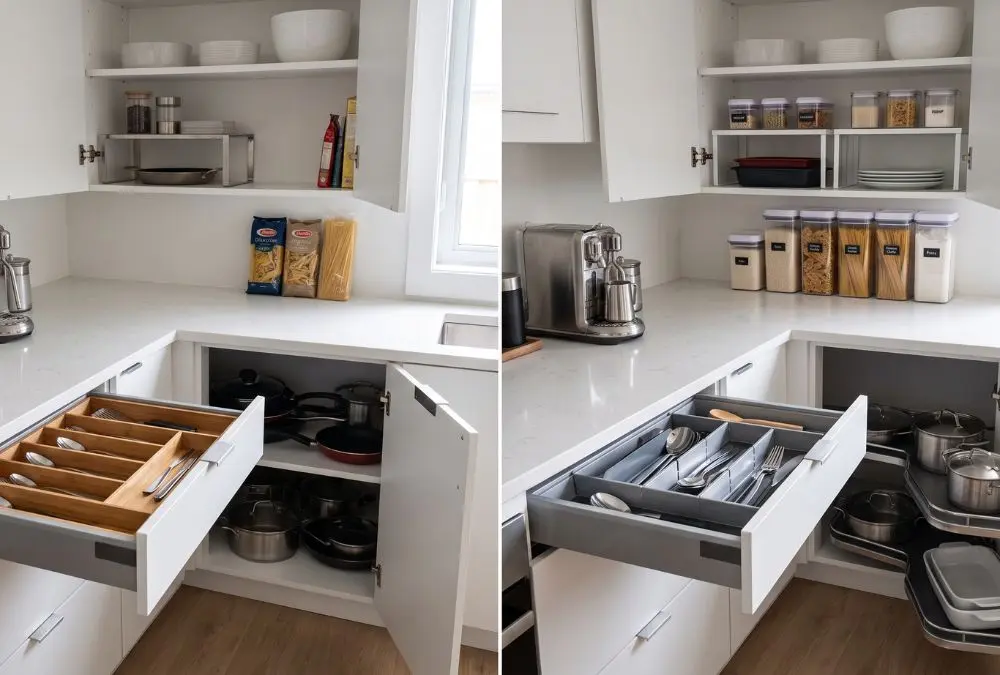
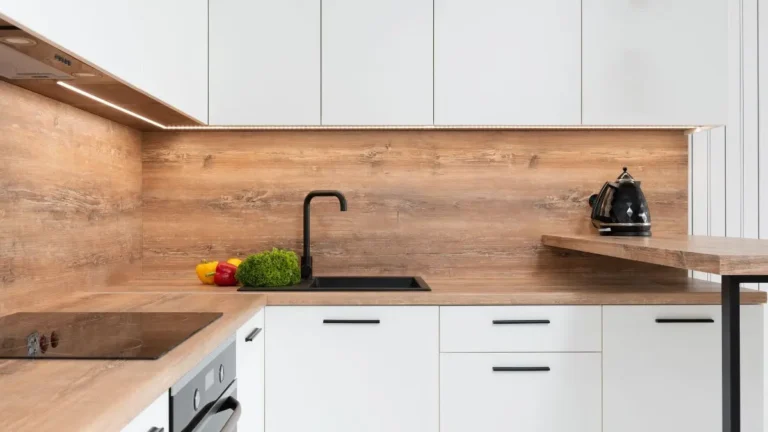
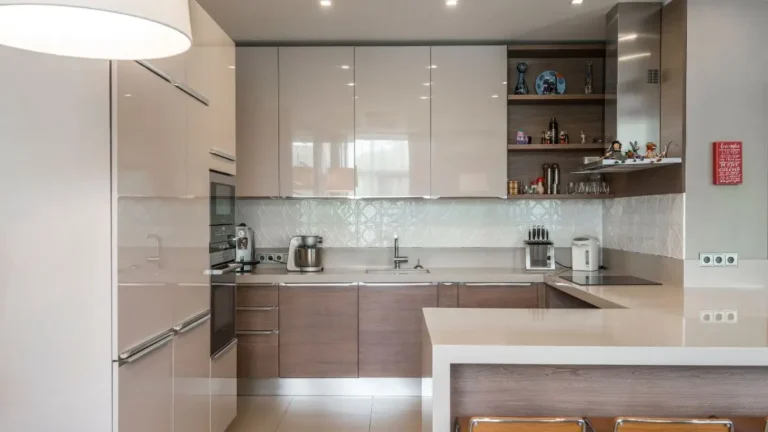
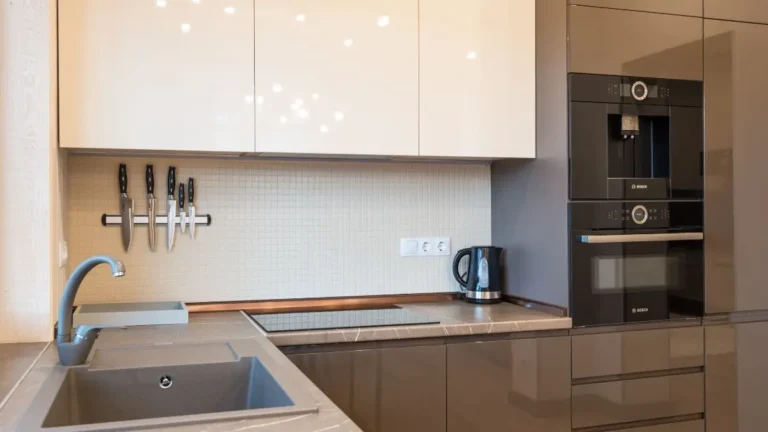
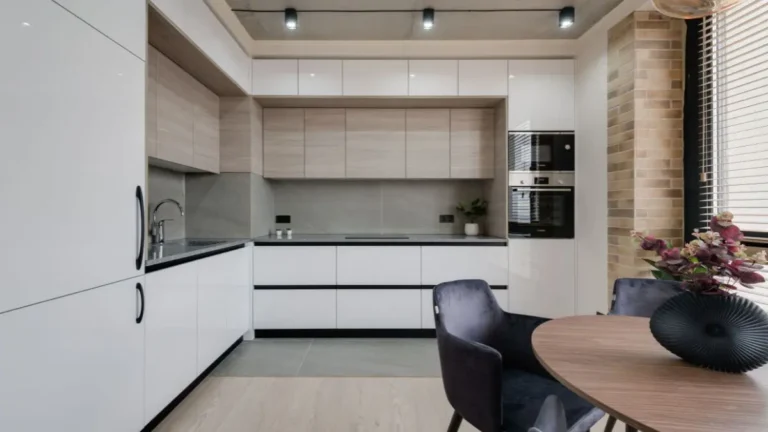
A kitchen tests storage products faster than any other room in the home, since everything in it gets touched at least once a day. The products worth keeping are rarely the most decorative ones. They are the ones that survive six months of real cooking without becoming another thing to tidy around. The same room-by-room thinking covered in Small Kitchen Organization Ideas That Actually Work applies directly here, and it’s the same standard The Container Store uses when testing its own kitchen organizers.
A drawer organizer with adjustable dividers earns its place by adapting as the contents of a kitchen drawer inevitably change, rather than locking a household into whatever configuration made sense on the day it was bought. A stackable set of clear bins does something similar for a pantry shelf, turning bags of rice, pasta, and flour that would otherwise slump into a mess into containers that stack cleanly and show their contents at a glance.
A slim, corner-shaped pull-out is worth the investment for any kitchen with a blind cabinet corner, since it turns the single most wasted cubic foot in most kitchens into genuinely accessible space. And a shelf riser, unglamorous as it sounds, is often the cheapest single product that changes how a cabinet functions, doubling the usable height of a shelf that was previously wasting the top half of its own space.
The pattern across all of them is the same: the best kitchen storage products solve a specific, repeated frustration, not a hypothetical one. Testing a product for a season, not a weekend, is usually the only way to know which category it falls into.
The difference shows up clearly in a before-and-after comparison of the same drawer or cabinet, six months apart. The version stocked with products chosen for how they look on the day of purchase tends to slide back into clutter almost immediately. The version stocked with products chosen for how they hold up under daily use still looks, and functions, the same way it did on day one.
Small Bathroom Storage Ideas That Don’t Sacrifice Style
A bathroom is usually the smallest room in the home and the one most likely to default to purely clinical storage: a plastic bin under the sink, a wire rack that never quite matches anything else. It does not have to work that way.
A floating shelf above the toilet claims vertical space that would otherwise sit empty, and it reads as considered rather than utilitarian when it holds a small, curated set of objects instead of an overflow of bottles. Woven baskets do quiet, flattering work here too, concealing whatever is genuinely unattractive, spare toilet paper, cleaning supplies, while adding warmth and texture to a room that is often all hard, cold surfaces.
A mirrored medicine cabinet remains one of the most efficient storage moves available in a small bathroom, since it adds real depth of storage without consuming a single inch of floor or wall space beyond what a plain mirror would have taken anyway. Over-the-door organizers, meanwhile, solve for the narrow, awkward space behind the bathroom door that almost every small bathroom leaves completely empty.
Style and storage are not actually in tension in a small bathroom. The tension only appears when storage gets bought as an emergency fix rather than chosen with the same intention as everything else in the room.
Small Bathroom Before & After: A Budget Storage Makeover
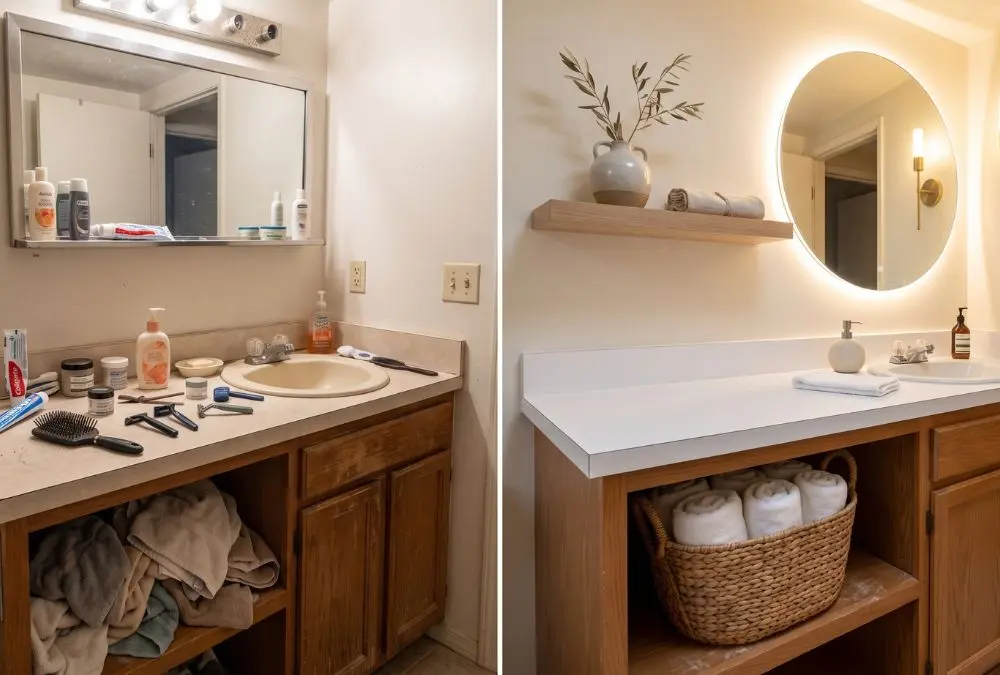
The most convincing bathroom transformations rarely start with a renovation budget. They start with a single Saturday, a short list of cheap fixes, and a willingness to remove things before adding anything new.
Clearing the counter first, even before buying a single new organizer, tends to reveal how much of the visual clutter was never really about a lack of storage at all. Half-empty product bottles, duplicate tools, and anything not used in the last month rarely need a home. They need to leave the room entirely.
What remains after that first pass usually fits into far less storage than it seemed to require. A single floating shelf, a woven basket for towels, and a mirrored cabinet for anything that needs to stay out of sight can absorb what is left, at a fraction of the cost of a full vanity replacement. The transformation reads as dramatic in a photograph, but the honest version of the story is that most of the work happened before a single new product arrived.
How to Organize a Small Bedroom on a Budget
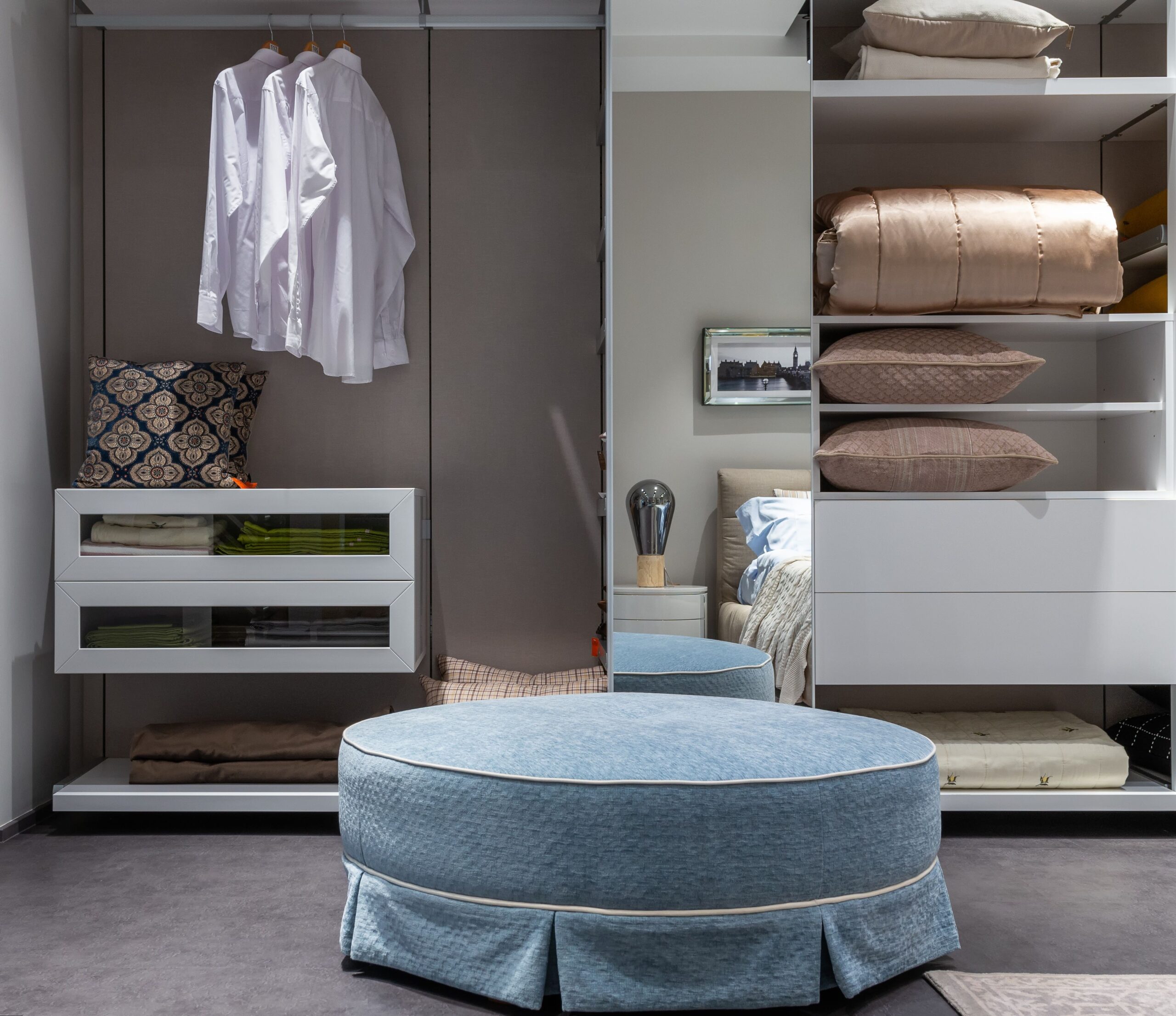
A small bedroom carries a specific kind of pressure, since it usually has to double as a closet, a home office corner, and the one room in the apartment meant to feel restful. Storage here has to work harder without ever looking like it is working at all. Good small space storage ideas earn their place here by disappearing into the room rather than announcing themselves.
Under-bed space is the most consistently wasted square footage in a small bedroom. Flat storage boxes or a set of rolling bins turn that dead zone into genuine capacity for off-season clothing or linens, without requiring a single piece of new furniture. A closet system with adjustable shelving does similar work inside a closet that came with one fixed rod and nothing else, often doubling what the space can hold for the cost of a single afternoon of installation.
A slim vertical organizer beside a nightstand or dresser can absorb shoes, bags, or accessories that would otherwise end up on the floor, and it costs a fraction of what a matching bedroom set would. None of these fixes require a design budget. They require noticing which parts of the room are already generous with space and simply have not been asked to earn their keep yet.
A bedroom organized this way rarely looks like it was organized on a budget at all. It just looks like a room where nothing is fighting for space, which is the same feeling luxury interiors are built around, regardless of the square footage involved. It’s a principle Real Simple comes back to again and again in its own small-space coverage, and the same logic carries straight through to the kitchen in the complete small kitchen ideas guide.
Frequently Asked Questions
What Is the Single Best Small Space Storage Idea to Start With?
Clearing before adding. Removing what genuinely does not belong in a room reveals how much less storage is actually needed, and it costs nothing beyond an afternoon.
Do Small Space Storage Ideas Have to Look Utilitarian?
No. Woven baskets, floating shelves, and closed cabinets all conceal clutter just as effectively as a plastic bin, while adding texture and warmth instead of a purely functional look.
Is It Worth Buying Storage Products Before Trying to Declutter First?
Rarely. Most small spaces need far less storage once the objects that never really belonged there are removed. Decluttering first almost always changes what gets bought, and how much of it.
About the Author
Sofia writes about small-space design the way an editor writes about craft, with an eye trained on light, proportion, and restraint. A believer in Scandinavian minimalism and multifunctional furniture, she built Luxury Small Space Living around one conviction: a compact home can carry the same elegance as any grand one, if every choice in it is made on purpose.