
Small Kitchen Organization Ideas That Actually Work
You spent an entire Sunday organizing this kitchen. Every drawer got dividers, every shelf got a system, and for about nine days it looked exactly like the photo that inspired the whole project. Then the takeout containers migrated back to the wrong shelf, a spice jar landed on the counter because there was nowhere obvious for it, and the drawer with the good intentions slowly filled with things that had no other home.
The system did not fail because you gave up on it. It failed because most small kitchen organization ideas are built for photographs, not for a Tuesday morning with five minutes before work.
What Makes Small Kitchen Organization Ideas Actually Work?
Small kitchen organization ideas that actually work share one trait above all others: they are built around how the kitchen is really used, not how it looks on the day the project wraps up. Zoning by task, choosing drawers over shelves where it counts, and keeping counters genuinely clear all follow from that same starting point — the same task-based approach professional organizers at NAPO recommend for any small space.
Zoning Your Kitchen by Habit, Not by Category
Most small kitchen organization ideas sort items by what they are: mugs with mugs, dry goods with dry goods, tools with tools. It reads as tidy on paper, and it is often the first thing to fall apart in practice, because it ignores the order a kitchen actually gets used in.
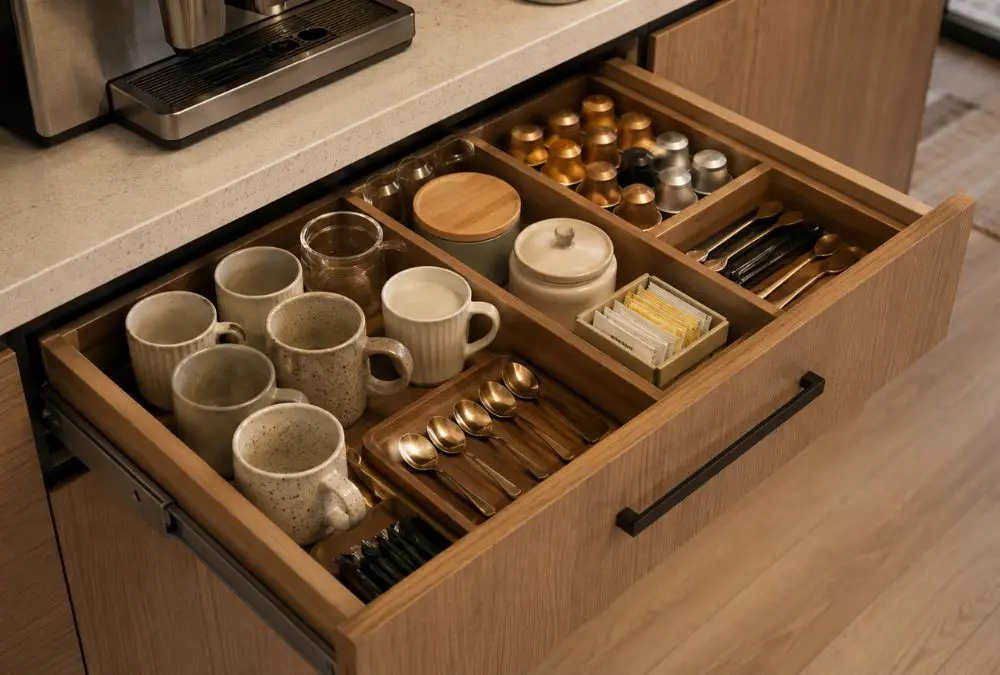
A coffee zone that keeps the mugs, the filters, and the coffee itself within one reach, even if that means mixing a ceramic mug with a paper filter box in the same cabinet, survives a rushed morning far better than a system that separates those same items into three technically correct but practically inconvenient locations. The same logic holds for a baking zone, where measuring cups, mixing bowls, and the flour and sugar used with them belong together, even though a strict category system would scatter them across cookware, dry goods, and bakeware shelves.
The test for a good zone is not whether it looks tidy in a photograph. It is whether a tired version of yourself, five minutes before needing coffee, can find everything without thinking. Zoning by task costs nothing to apply, since it only requires rearranging what already lives in the cabinets rather than buying anything new. It is one of the most reliable small kitchen ideas to apply room-wide, not just cabinet by cabinet.
Drawers vs. Shelves: What to Use Where
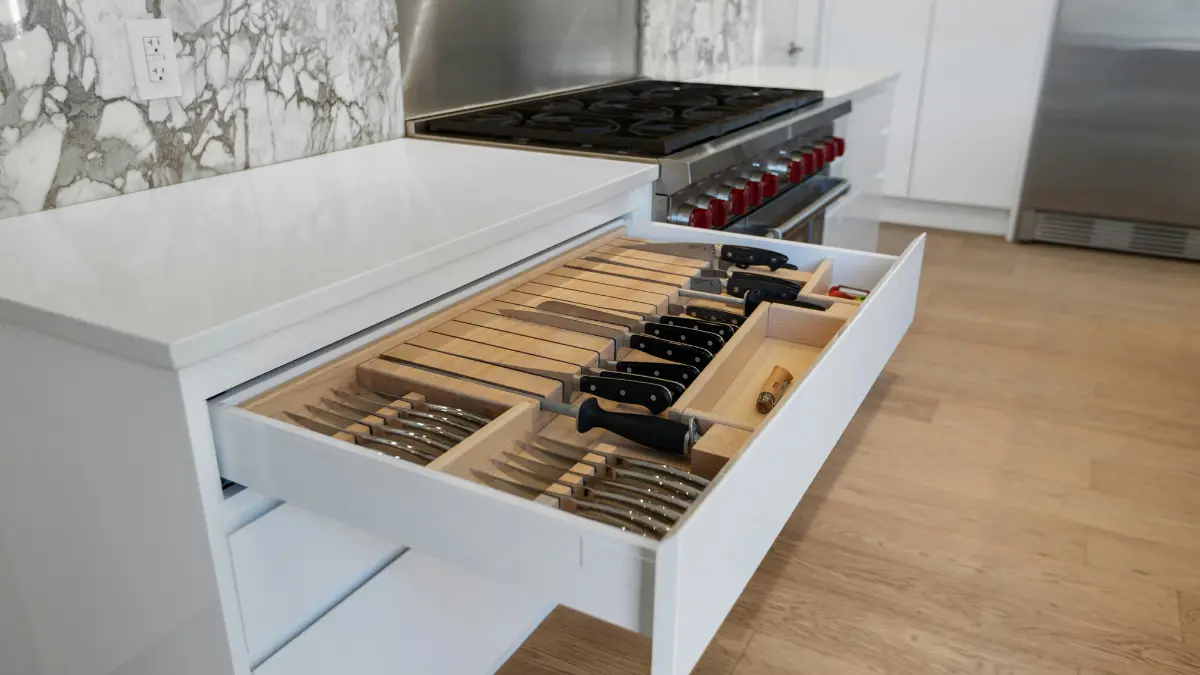
Visibility matters as much as capacity, and it is one of the most overlooked small kitchen organization ideas: deep drawers tend to outperform shelves behind a closed door for anything reached for daily. A drawer presents its entire contents at once, while a cabinet shelf hides whatever sits behind the front row, which is exactly what gets forgotten and quietly rebought a few months later.
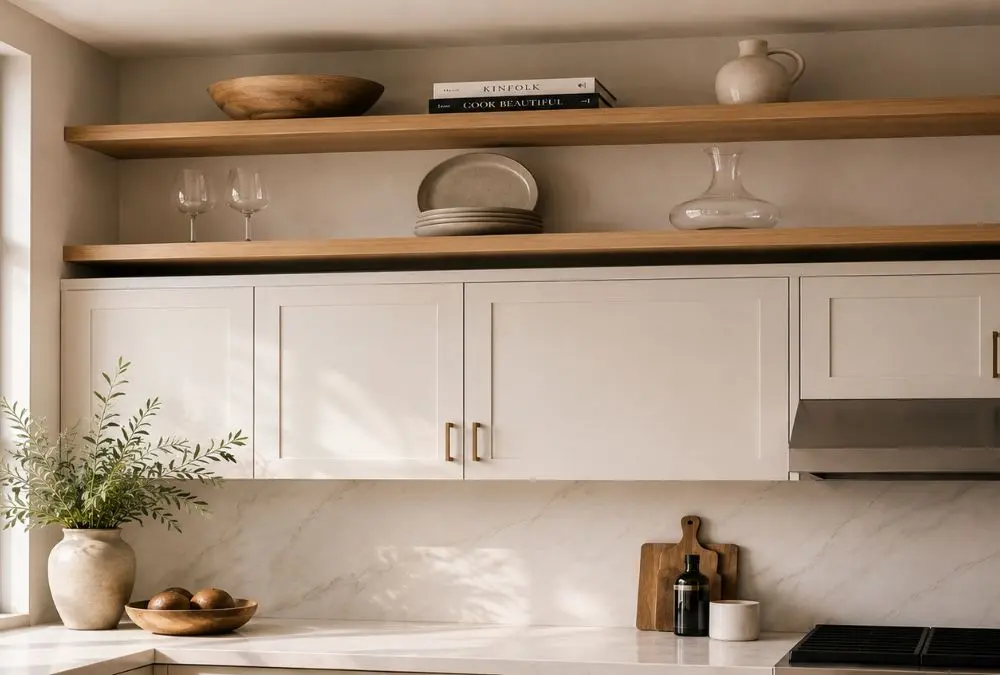
Converting even a single lower cabinet from shelves to drawers is a modest project compared to a full renovation, and it is often the change that does the most to stop small, recurring frustrations before they start. Open shelving earns a place too, but it works best for items used often enough to stay in rotation, since anything left untouched on an open shelf reads as clutter rather than storage.
The general rule holds up well across a whole kitchen: the more often something gets reached for, the more visible and accessible its home should be, and the less it should depend on remembering where it went.
Keeping the Counter Genuinely Clear
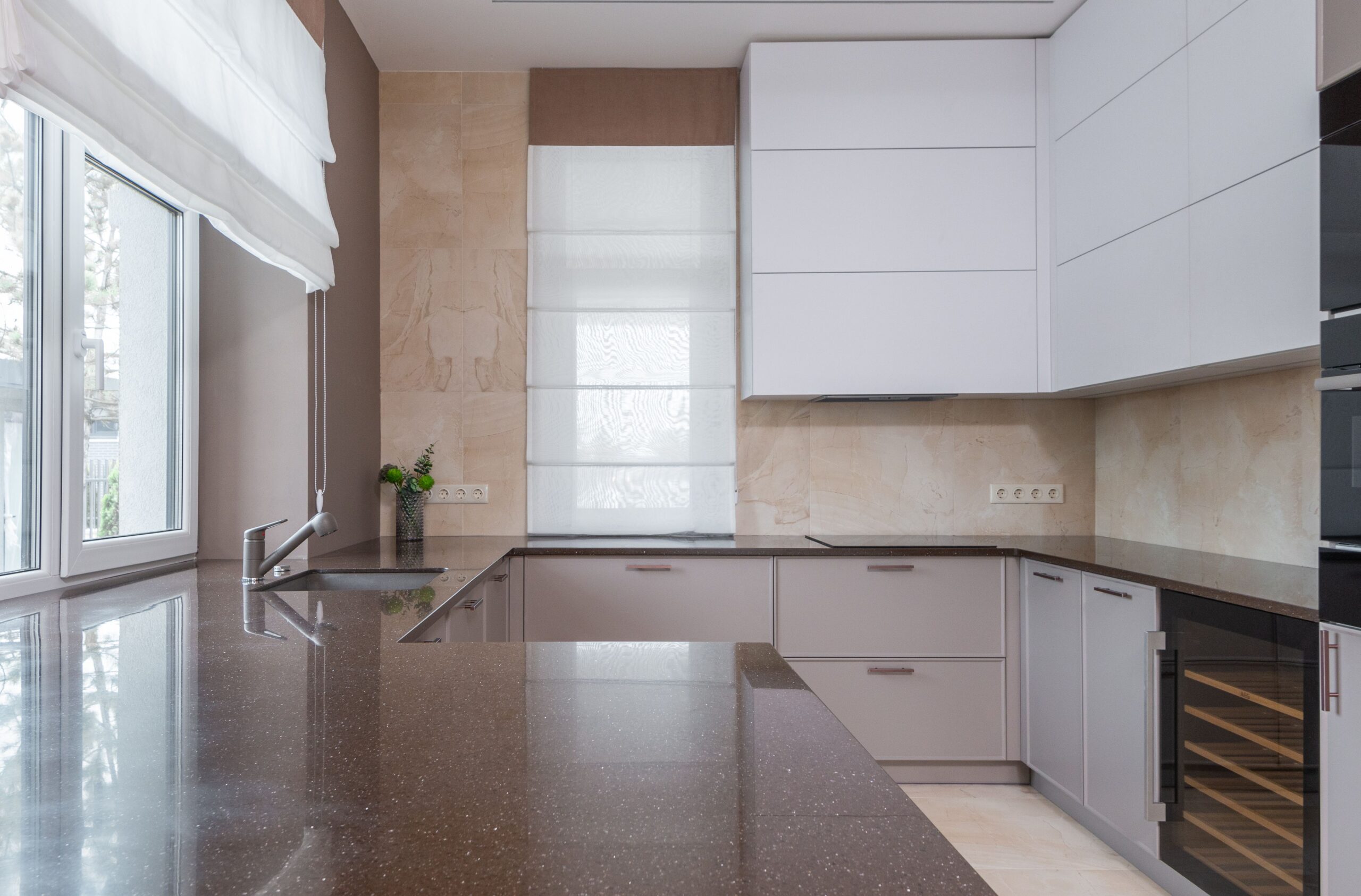
Among the small kitchen organization ideas worth prioritizing, an appliance garage — a shallow doored compartment built into the counter’s end run — can absorb a stand mixer, blender, or toaster that would otherwise live permanently in view. It is a modest addition compared to a full cabinet run, and it often does more to keep a counter clear than any amount of decluttering elsewhere in the kitchen, and it is worth comparing against a retrofit option for cabinets that already exist.
None of this requires owning fewer things. It requires giving every object a home that is not the countertop, and treating a clear counter as the default state to return to, not a state reserved for the days guests are coming over.
Building a System That Survives a Busy Week
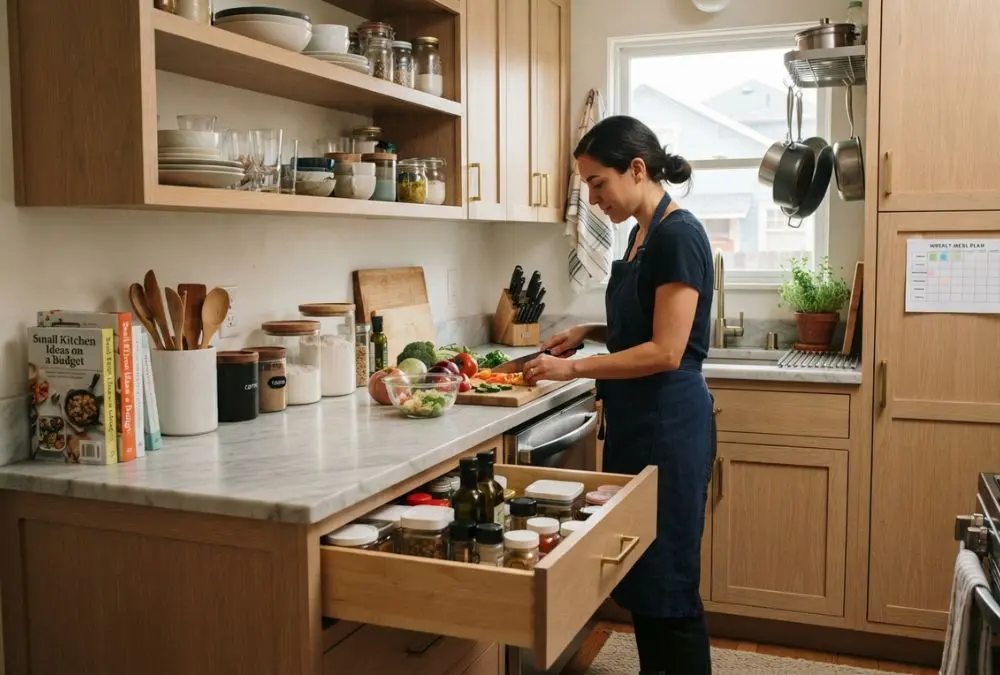
The kitchens that stay organized are usually the ones built around small kitchen organization ideas rooted in a real week of cooking, not around an ideal version of one. That distinction, matching the system to actual habits rather than aspirational ones, is the difference between an organizing project that lasts and one that quietly falls apart by the second week.
Once the zones, the drawers, and the clear counter are in place, the same thinking extends naturally into a full renovation if one is ever on the table. Small Kitchen Renovation Ideas on a Budget covers which upgrades are worth making once the organizing groundwork is already done, and the complete small kitchen ideas guide ties this system back into the full picture of layout, storage, and renovation together.
Frequently Asked Questions
What Is the Fastest Small Kitchen Organization Idea to Start With?
Zoning by task. It costs nothing, takes an afternoon, and only requires moving what is already in the cabinets into groups based on how they get used together, rather than what category they technically belong to.
Should Everything Go in a Drawer Instead of a Cabinet?
No. Drawers earn their place for anything reached for daily, where visibility matters most. Items used less often are usually fine on a shelf or in a cabinet, since the cost of occasionally searching for them is lower than the cost of converting every cabinet in the kitchen.
How Often Should a Small Kitchen Organization System Be Reset?
Rarely, if it was built around real habits from the start. A system that needs resetting every few weeks was usually organized by category rather than by task, which is the most common reason a well-intentioned project stops working.
About the Author
Sofia writes about small-space design the way an editor writes about craft, with an eye trained on light, proportion, and restraint. A believer in Scandinavian minimalism and multifunctional furniture, she built Luxury Small Space Living around one conviction: a compact home can carry the same elegance as any grand one, if every choice in it is made on purpose.
This article contains affiliate links. If you purchase through one, Luxury Small Space Living may earn a small commission at no extra cost to you. We only recommend pieces we believe genuinely earn their place in a small kitchen.
2 Comments